

Advertisement

Advertisement
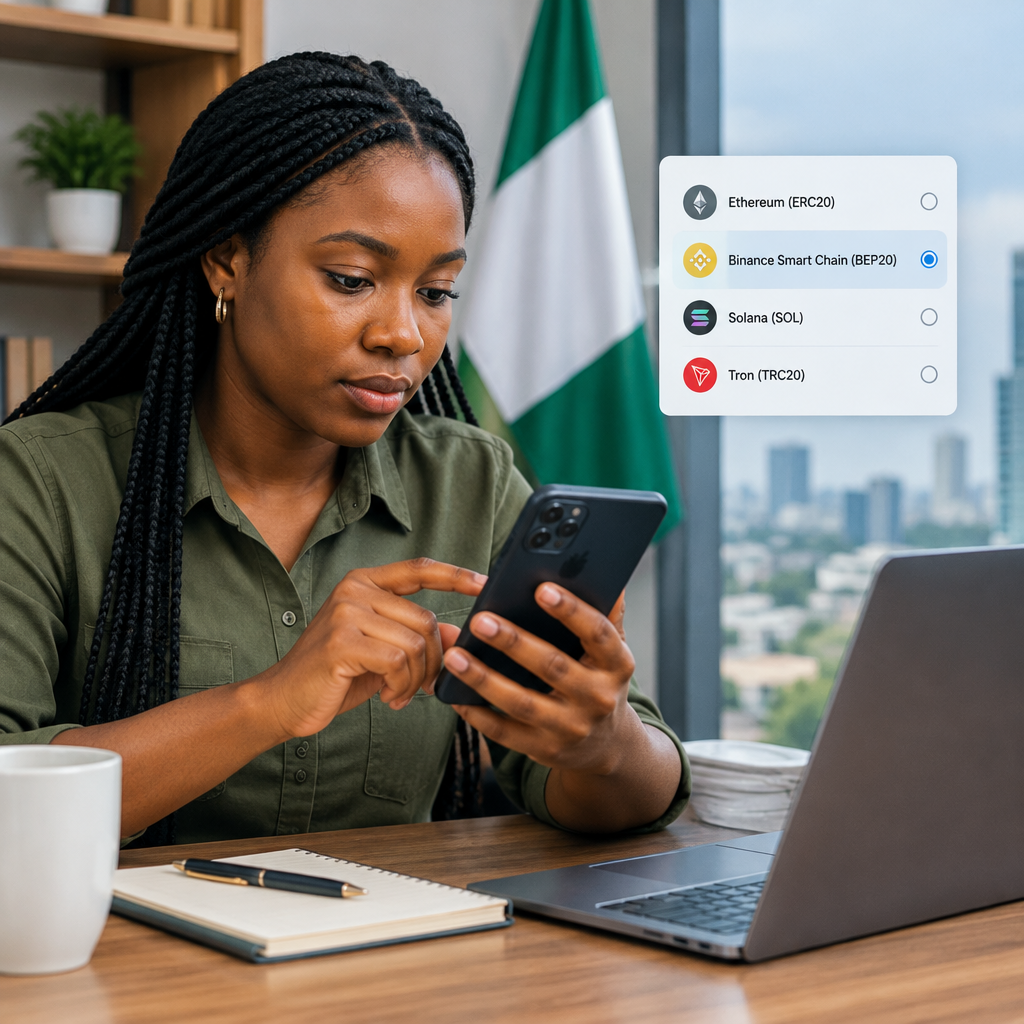
Sending cryptocurrency is not only about copying the recipient’s wallet address. You must also select the correct network. Choosing the wrong network can delay a transfer, make recovery difficult or result in permanent loss of funds.
This guide explains how networks work, how to compare the sender and recipient details, and what to do before confirming a transfer. It is written for beginners, including Nigerians using cryptocurrency platforms for online payments, transfers or other digital transactions.
Advertisement
Table of Contents
What does a cryptocurrency network mean?
A cryptocurrency network is the blockchain or transfer system used to move a particular asset. For example, the same stablecoin may be available on more than one network. Although the asset name and wallet address may look similar, the networks are separate systems with different transaction fees, speeds and technical requirements.
Depending on the platform, you may see network names such as Ethereum, BNB Smart Chain, Tron, Polygon, Solana or other supported blockchains. The exact options vary between exchanges and wallets.
A network is not the same thing as a cryptocurrency. A token can exist on multiple networks, while some coins are closely associated with their own blockchain. The important rule is simple: the network selected for sending must be supported by the receiving wallet or platform for that specific asset.
Why choosing the wrong network is dangerous
Two platforms may display the same token but support different networks. If you send through a network the recipient does not support, the transaction may not appear automatically in the recipient’s account.
Recovery is not guaranteed. In some cases, the receiving platform may be able to locate and recover the funds, but it may charge a fee, require technical investigation or refuse recovery altogether. If you control both wallets, recovery may be possible in some situations, but it can still require technical knowledge and may not work for every asset or network.
Blockchain transfers are generally difficult to reverse. A customer-service representative cannot always cancel a transaction after it has been confirmed. This is why checking the network before sending is more important than trying to fix a mistake afterwards.
The three details you must match
Before making a transfer, compare these details on both the sending and receiving platforms:
- Asset: Confirm that both sides refer to the same cryptocurrency or token. Do not assume that two assets with similar names are identical.
- Network: Select the same blockchain or transfer network on the sender and recipient sides.
- Deposit address: Copy the complete address carefully and confirm that it belongs to the intended asset and network.
Some assets also require a memo, tag, payment ID or reference. This is common with certain exchange deposits and is separate from the wallet address. If the receiving platform provides one, follow its instructions exactly. Leaving out a required memo or tag can create another recovery problem even when the network is correct.
A safe process for choosing the network
1. Open the receiving deposit page first
Start with the platform or wallet that will receive the funds. Choose the asset you want to deposit and open its deposit instructions. Look for the available networks and any warnings about unsupported transfers.
Do not rely only on a previous transaction. Platforms can add or remove networks, and the same account may offer different options for different assets.
2. Record the exact supported network
Write down or carefully note the network shown on the receiving side. Network names can appear in different formats. For example, a platform may use a full name, an abbreviation or a label that refers to the same blockchain.
If you are not sure whether two labels mean the same network, pause the transfer and check the platform’s official help centre. Avoid relying on a random social-media post or a message from someone claiming to be support.
3. Open the withdrawal page on the sending platform
Paste the recipient address into the withdrawal form. The platform may then show the networks available for that address and asset. Select only a network that matches the receiving deposit instructions.
If the matching network does not appear, do not choose a different one simply because it has a lower fee. A cheaper transfer that cannot be credited is not a saving.
4. Check the network fee and minimum amount
Confirm the withdrawal fee, minimum transfer amount and the amount the recipient will actually receive. Fees may differ between networks and may be deducted from the amount you enter.
These figures can change, so treat the amount shown on the confirmation screen as the relevant figure. Never send more than you can afford to lose while testing a new route.
5. Send a small test transaction
When the amount is significant or you are using a new wallet, make a small test transfer first. Wait for it to arrive and confirm that the receiving balance is correct before sending the remaining funds.
A test transaction does not eliminate every risk, but it can reveal an incorrect address, unsupported network or missing memo before the full amount is sent.
6. Review the final confirmation screen
Before approving the transaction, check the asset, address, network, amount, fee and memo or tag. Compare the first and last few characters of the address with the receiving address. If possible, verify the complete address as well, because malware or clipboard-replacement attacks can alter copied wallet addresses.
Common examples of network confusion
A user may be asked to deposit a stablecoin and see several network options. The stablecoin name may be the same, but the deposit address and technical route may differ. Sending through one network when the recipient selected another can prevent the deposit from appearing.
Another example is transferring funds from an exchange to a personal wallet that supports only certain blockchains. The exchange may show many networks, but the personal wallet may support only one or two for that asset. The wallet’s supported-network information must take priority.
There can also be differences between a self-custody wallet and an exchange account. In a self-custody wallet, you may control the private keys, but that does not mean every asset or network is automatically supported. In an exchange account, the platform may control the technical recovery process and apply its own rules.
Safety warnings for Nigerian users
Cryptocurrency scams often use urgency. A person may claim that your account will be closed, a bonus will expire or a transfer will be released only after you pay an extra fee. Do not send funds based on such pressure.
- Never share your password, PIN, one-time password, recovery phrase or private key.
- Use the platform’s official application or website instead of a link sent by a stranger.
- Be cautious of people offering to “fix” a failed transfer if they request your recovery phrase or remote access to your device.
- Confirm payment details outside a suspicious chat where possible, using a trusted official channel.
- Remember that cryptocurrency transfers are not guaranteed income and prices can change sharply.
For readers using cryptocurrency alongside online banking or other digital services, keep crypto security separate from ordinary account support. Legitimate support should not need your private keys or recovery phrase.
What to do if you selected the wrong network
First, do not send another transaction to “cancel” or unlock the original one. Save the transaction ID, asset, amount, wallet address, selected network and approximate time of transfer.
Contact the receiving platform through its official support route and provide the requested transaction information. Do not post your private key, recovery phrase or account login details publicly. If the destination is a wallet you control, check whether the wallet officially supports that network and asset, but avoid importing sensitive keys into unfamiliar applications.
Recovery depends on the destination, asset, network and platform policy. Anyone promising guaranteed recovery in exchange for an upfront payment should be treated as a likely scam.
A final pre-send checklist
- Is the asset exactly correct?
- Does the receiving side support the selected network?
- Does the sending side use the same network?
- Is the full address correct?
- Is a memo, tag or payment ID required?
- Have you checked the fee and minimum amount?
- Would a small test transaction be sensible?
- Have you ignored pressure, unofficial links and requests for secret information?
The safest cryptocurrency transfer is not necessarily the fastest or cheapest one. It is the transfer where the asset, network, address and receiving instructions all match before you press confirm. Take a few extra minutes to verify those details, because blockchain transactions may not provide a second chance.
Advertisement
