

Advertisement

Advertisement
The safest phone charger is not necessarily the one with the highest wattage or the lowest price. Your phone, charging cable and power adapter must work together, and the accessories should come from a reliable manufacturer.
Using a compatible, certified charger with the correct cable will not normally damage your battery simply because the adapter can supply more power. Modern phones control how much power they accept. However, poor-quality chargers, damaged cables, excessive heat and unreliable electrical supplies can create safety risks and accelerate battery wear.
Advertisement
Table of Contents
Understand the three parts of charging
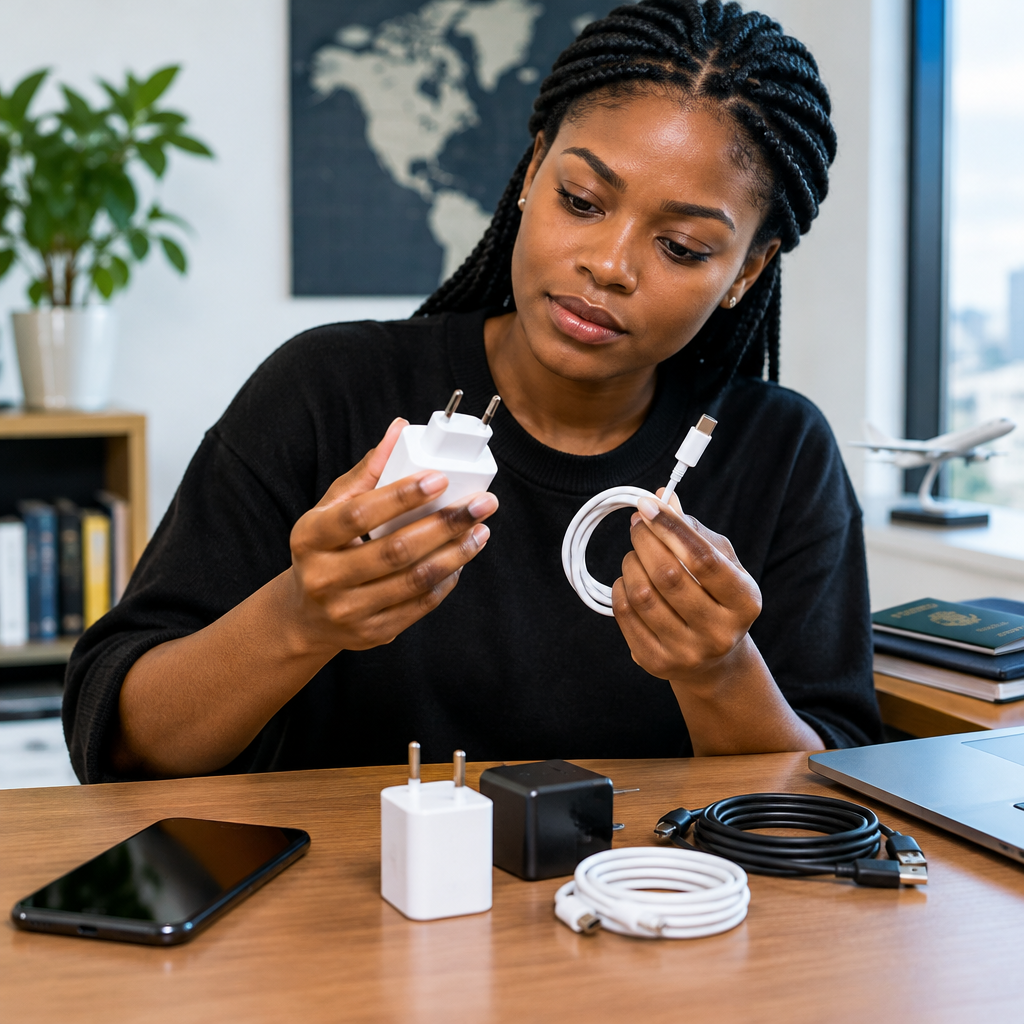
When people say “phone charger”, they may mean three different things:
- Power adapter: The plug that connects to a wall socket or power strip.
- Charging cable: The USB-C, Lightning or older Micro-USB cable that connects the adapter to the phone.
- Charging protocol: The system that allows the phone and adapter to agree on voltage and current, such as USB Power Delivery.
A safe charging setup requires all three parts to be suitable. A good adapter paired with a damaged cable can still charge unreliably. Similarly, a genuine cable connected to a suspicious adapter may be unsafe.
Check compatibility before buying
Start by checking the charging port on your phone. Many newer Android phones use USB-C. Some older Android devices use Micro-USB, while many iPhones use either Lightning or USB-C depending on the model. The cable connector at the phone end must match the port.
Next, check the phone maker’s charging requirements. If the original adapter is available, look at its label for output information such as 5V, 9V or a wattage rating. The replacement does not have to be identical, but it should support a compatible charging standard.
For example, a USB-C phone may charge safely from a USB Power Delivery adapter, but fast-charging performance can vary. A charger can be safe yet charge more slowly if it does not support the phone’s preferred protocol.
What charger wattage really means
Wattage describes the maximum power an adapter can provide under suitable conditions. It does not mean the phone will constantly receive that amount.
If a phone is designed to accept up to 25 watts and you connect it to a reputable 65-watt adapter, the phone will usually draw only the power it is designed to use. The extra capacity is not automatically forced into the battery. The phone and adapter negotiate the charging level where the relevant protocol is supported.
A low-quality adapter is different. It may have inaccurate labels, poor insulation or unstable output. Its advertised wattage should not be treated as proof of safety.
USB Power Delivery and fast charging
USB Power Delivery, often called USB-PD, is a widely used charging standard that allows compatible devices and adapters to negotiate power levels. Some manufacturers also use their own fast-charging systems. A phone may need a specific adapter and cable to reach its fastest supported speed.
Fast charging is convenient, especially when you need to leave home quickly, but it can produce more heat. Heat is one of the main factors that can contribute to battery ageing. For overnight charging or long periods at a desk, a slower, reputable charger may be a sensible choice if speed is not important.
How to identify a safer charger
Look for an established manufacturer, clear product identification and complete electrical specifications. The adapter should state its input and output ratings, rather than displaying only a vague claim such as “super fast”.
A safer buying checklist includes:
- Buy from a trustworthy retailer or the phone manufacturer where possible.
- Check that the packaging identifies the maker and model.
- Look for clear output ratings and supported charging standards.
- Choose a cable designed for the phone’s connector and intended charging power.
- Keep the receipt or proof of purchase in case the accessory is defective.
Do not assume that a familiar-looking logo proves authenticity. Counterfeit accessories can copy packaging and branding. An unusually cheap adapter, poor printing, loose plug or strong plastic smell should make you cautious.
Do not ignore the cable
Cables suffer wear from bending, pulling and repeated twisting. Replace a cable if its outer covering is split, the connector is loose, the wire becomes hot, charging repeatedly starts and stops, or the phone displays a moisture or accessory warning without a clear reason.
Do not continue using a cable by wrapping exposed wires with tape. Tape may hide the damage but does not restore insulation or protect the connector. Avoid charging through a cable that has been crushed under furniture or sharply bent near the plug.
Some USB-C cables support higher charging power than others. If fast charging is important, check that the cable is rated for the power level supported by your phone and adapter. A cable can fit the port and still be unsuitable for the fastest charging mode.
Heat matters more than small differences in wattage
It is normal for a phone to become slightly warm while charging. It should not become unusually hot, smell like burning plastic or feel unsafe to touch.
To reduce heat:
- Charge the phone on a hard, uncovered surface rather than under a pillow or blanket.
- Avoid using demanding games or video apps while fast charging.
- Remove a thick case temporarily if the phone becomes hot during charging.
- Keep the phone and adapter away from direct sunlight and other heat sources.
- Stop using the setup if the adapter, cable or phone becomes extremely hot.
Heat can also come from a poor wall socket, an overloaded extension board or an unstable power supply. In Nigeria, where people may use power banks, extension boards, inverters or generators as well as wall sockets, inspect every part of the charging chain rather than blaming the phone immediately.
Choosing between an adapter, power bank and wireless charger
A wall adapter is usually the simplest option when you have a reliable socket. Choose one with enough output for your phone and a reputable safety design.
A power bank should have a clearly stated capacity and output, protection against overcharging and short circuits, and a trustworthy brand. Avoid power banks that become swollen, leak, smell unusual or heat excessively. Never carry or use a visibly swollen battery.
Wireless charging is convenient but can create more heat than wired charging, especially when the phone and charging pad are not properly aligned. Use a compatible pad, remove objects such as coins or cards from between the phone and pad, and stop if the phone becomes excessively hot.
Charging habits that help your battery last
You do not need to wait until the battery reaches zero before charging. Lithium-ion phone batteries generally experience less stress when they are not repeatedly kept at extreme low or high charge levels. Occasional full charges are normal, but keeping a phone hot and completely full for long periods may contribute to faster ageing.
Use the phone’s built-in battery protection or optimised charging feature if it provides one. These features may slow or pause charging in certain situations to reduce the time the battery remains at a high level.
Battery capacity will decline naturally with use. A safe charger cannot prevent normal ageing, but it can help you avoid unnecessary damage from heat, electrical faults and poor accessories.
A simple decision framework
Before buying, ask four questions:
- Does the connector fit? Confirm whether the phone needs USB-C, Lightning or Micro-USB.
- Does the adapter support the phone’s charging standard? Check the phone maker’s specifications, especially if you want fast charging.
- Is the power rating suitable? A reputable higher-wattage adapter is usually acceptable when the phone controls the negotiated power, but the correct protocol and cable still matter.
- Is the product and seller trustworthy? Reject accessories with unclear specifications, suspiciously low prices or visible defects.
When there is any doubt, use the original adapter and cable or buy a replacement from the phone maker or a reliable retailer. The best charger is not the one making the biggest promise on its packaging; it is the one that delivers stable power, manages heat properly and matches your phone’s requirements.
Advertisement
