

Advertisement

Advertisement
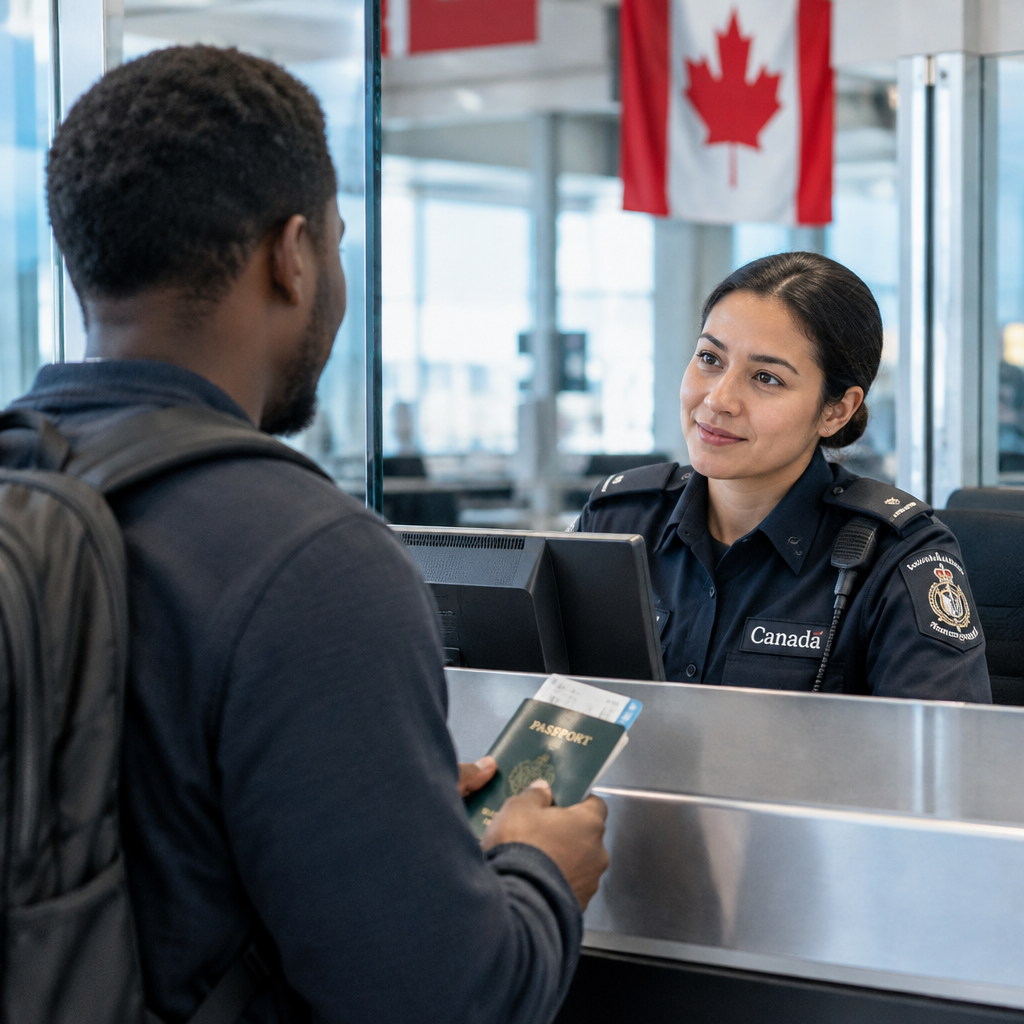
Arriving in Canada as a visitor can feel stressful, especially when an officer asks questions quickly after a long journey. The best preparation is not memorising perfect answers. It is understanding the purpose of the questions, keeping your information consistent and carrying documents that support your temporary visit.
Canadian border officers assess whether you meet the requirements to enter Canada and whether you intend to follow the conditions of your stay. A visitor visa or travel authorisation, where required, allows you to travel to a Canadian port of entry; it does not automatically guarantee admission. The final decision is made when you arrive.
Advertisement
Table of Contents
What border officers are trying to confirm
Most questions are designed to establish a few basic facts:
- Why are you visiting Canada?
- How long do you plan to stay?
- Where will you stay?
- How will you pay for the trip?
- What work, studies, business or family responsibilities do you have outside Canada?
- Do you have items that must be declared?
- Are you carrying anything restricted or prohibited?
The officer may also ask follow-up questions if your answers are unclear, if your documents do not match your explanation or if the proposed visit raises concerns about whether you will leave Canada as planned.
Questions you may be asked
“What is the purpose of your visit?”
Give a direct answer that matches your application and supporting documents. For example, you might say that you are visiting a relative, attending a short event, taking a holiday or visiting friends. If you have several purposes, explain them briefly and in order.
Do not describe a holiday as a business trip, or a plan to work as tourism. Visitors generally need the correct permission for activities such as working or studying. If your plans have changed since you applied, explain the change honestly rather than trying to force your original answer to fit.
“How long will you stay?”
State the length of your planned visit and give the return date if you have one. Your answer should be consistent with your accommodation, itinerary, leave from work or school and available funds.
Avoid saying that you will stay “as long as possible” or that you will decide after arrival. If you genuinely have a flexible plan, explain the intended period and the reason for the flexibility. Do not claim that a return ticket guarantees entry; it is only one piece of information about your plans.
“Where will you stay?”
Know the full address and contact details of your hotel, host, friend or family member. If you will stay in more than one place, keep a simple itinerary showing the locations and dates.
If someone is hosting you, be ready to explain your relationship with that person and whether they are providing accommodation, financial support or both. Your host’s invitation does not replace your responsibility to satisfy the officer that you are a genuine temporary visitor.
“How will you pay for your visit?”
Explain the source of your funds clearly. Depending on your circumstances, this may include personal savings, income, a sponsor’s support or a combination of these. Carry evidence that supports your explanation, such as recent bank statements, employment information or a clear sponsorship letter where relevant.
Never borrow documents or present money that is not genuinely available to you. False or misleading financial information can create serious immigration problems.
“What do you do in Nigeria?”
The officer may ask about your job, business, studies or family responsibilities because these details can help explain your reason to return. Answer accurately. If you run an online business, work as a creator or operate a small enterprise, bring reasonable evidence such as business registration records, client commitments or other documents that genuinely apply to you.
Do not exaggerate your income or claim employment that does not exist. The goal is to explain your real circumstances, not to produce a more impressive story.
Documents to organise before travelling
Keep important documents accessible in your hand luggage rather than in checked baggage. The exact documents you need depend on your situation, but a practical folder may include:
- A valid passport and the required Canadian travel document, if applicable.
- Your accommodation details and contact information for your host.
- A simple travel itinerary.
- Evidence of funds and how the trip will be financed.
- Employment, business, school or other documents that explain your reason to return.
- An invitation or event information, if relevant.
- Details of your return or onward travel, if already arranged.
- Prescriptions and supporting medical documents for medication you carry.
Documents are supporting evidence, not a substitute for truthful answers. An officer may not ask to see every item, but you should be able to locate anything relevant quickly.
How to answer effectively at the border
Be truthful and concise
Answer the question asked. Long, rehearsed explanations can create confusion and may appear evasive. If the officer needs more information, they will ask a follow-up question.
Ask for clarification when necessary
If you do not understand a question because of accent, speed or unfamiliar wording, politely ask the officer to repeat it. Do not guess. If you need language assistance, explain that clearly.
Keep your story consistent
Your answers should agree with your application, accommodation details, itinerary and documents. Check these details before departure, especially dates, addresses, names and the purpose of the trip.
Do not volunteer unrelated information
There is no benefit in offering a long personal history when a short answer is enough. At the same time, never hide information that is relevant to the officer’s question or to your admissibility.
Items and information you must declare
Follow the declaration instructions at the airport or other port of entry. Declare food, plants, animal products, large amounts of currency or monetary instruments and other goods when required. If you are unsure whether something must be declared, ask an officer instead of guessing.
Do not carry packages for another person unless you know exactly what they contain and are prepared to declare them. Avoid transporting sealed parcels, documents or luggage on behalf of strangers. You remain responsible for items in your possession.
Medication should be kept in its original packaging where possible, with a prescription or doctor’s note if appropriate. Rules can differ depending on the medicine, quantity and circumstances, so travellers with controlled or unusual medication should check official Canadian guidance before departure.
Common mistakes that can cause problems
- Giving a purpose of travel that differs from the visa application.
- Not knowing the address where you will stay.
- Claiming that you will visit briefly while carrying evidence of plans to work or remain long-term.
- Using fake bank statements, employment letters or invitation documents.
- Assuming a visa guarantees admission.
- Failing to declare food, goods, cash or items carried for someone else.
- Arguing with the officer or treating routine questions as a personal attack.
- Relying on advice from an unofficial agent instead of checking Canadian government information.
A simple preparation exercise
Before leaving Nigeria, write short answers to these five questions:
- Why am I visiting Canada?
- Where will I stay?
- How long will I remain?
- Who is paying for the trip?
- What will take me back home after the visit?
Then compare your answers with your application, booking information and supporting documents. If any detail has changed, prepare a truthful explanation and evidence where available.
The key point to remember
Canadian border questions are usually easier when your visit is genuine, your plans are clear and your documents support what you say. Prepare to explain your purpose, finances, accommodation and reasons for returning outside Canada, but do not memorise a script. Speak calmly, answer honestly and declare anything required.
For Nigerians planning a trip, immigration and border rules can have serious consequences when misunderstood. Check the latest information from the Government of Canada before travelling, particularly if your plans involve work, study, medication, extended stays or goods that may require declaration.
Advertisement
