

Advertisement
Advertisement
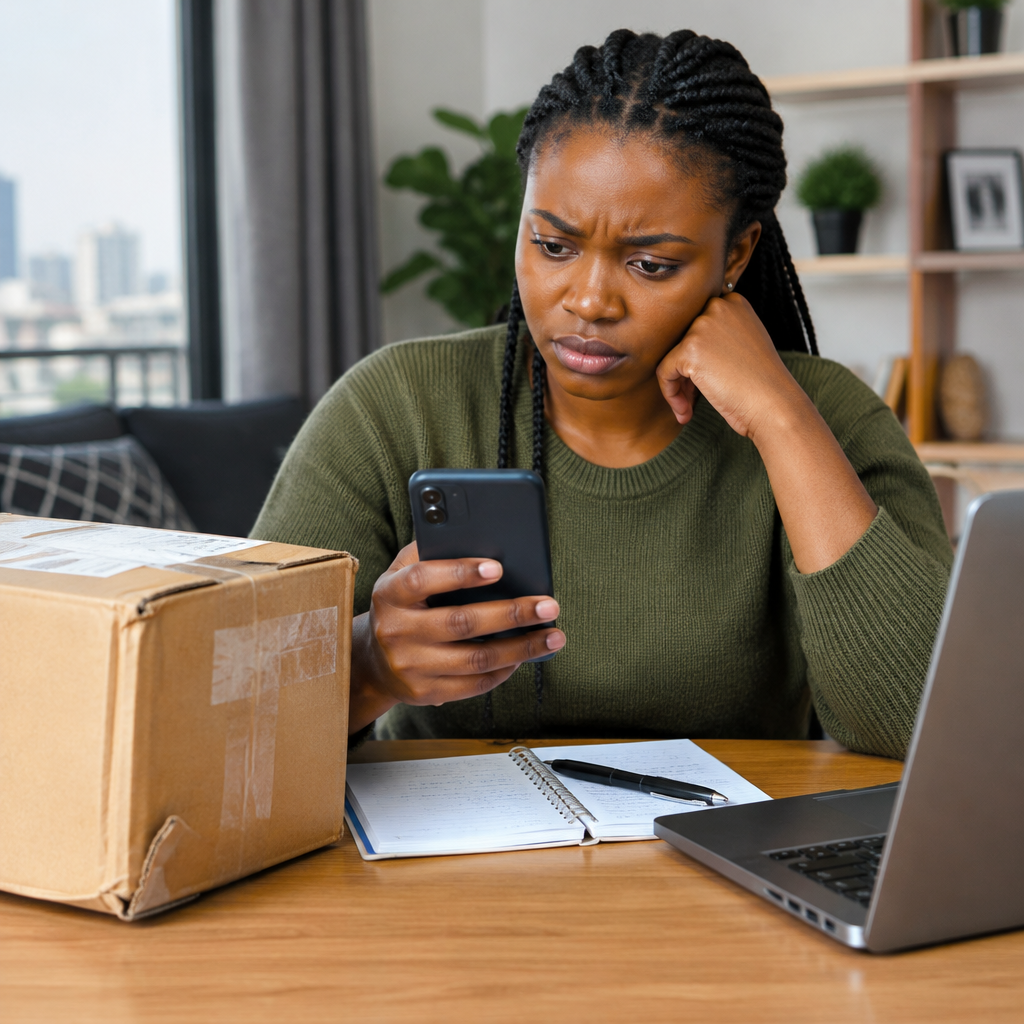
A late, missing, damaged or incorrect delivery is frustrating, especially when you have already paid. However, a complaint supported by clear evidence is more likely to receive useful attention than an angry message with few details.
Whether you ordered through a large marketplace, a social-media seller, a courier service or an online shop, start documenting the problem as soon as you notice it. Keep the records together, communicate through traceable channels and avoid sharing sensitive information such as your card PIN, password or one-time password.
Advertisement
Table of Contents
First, identify the delivery problem
Different problems may require different solutions. Write down exactly what happened instead of using only a general description such as “my order is bad.” Your issue may be one or more of the following:
- The delivery is past the promised date.
- The tracking information has stopped updating.
- The order is marked as delivered, but you did not receive it.
- The package arrived damaged, opened or incomplete.
- You received the wrong item, size, colour or quantity.
- The item is materially different from its description.
- The seller or courier is not responding.
- You were asked to pay an unexpected delivery or clearance charge.
Be precise about the remedy you want. Depending on the situation, this could be delivery of the correct item, a replacement, repair, a refund or an explanation from the seller.
Build an evidence file
Create one folder on your phone or computer for the order. If the matter becomes more serious, a single folder makes it easier to explain what happened to the seller, payment provider or other complaint channel.
Save your order details
Keep screenshots or downloaded copies of:
- The order confirmation and order number.
- The product page, including the description, images, stated price and delivery promise.
- The seller’s name, store profile, website address and contact details.
- The invoice, receipt or payment confirmation.
- The delivery address and contact information used for the order.
- The tracking number and each tracking update.
Product pages can change after purchase. If the description was important to your decision, capture it as soon as possible. Make sure screenshots show the date or other surrounding information where available, but do not expose full card numbers or private account details.
Record the condition of the package
If the package arrives damaged, photograph it before throwing away the packaging. Take clear pictures of:
- The outside of the parcel from several angles.
- Shipping labels and visible damage.
- Any broken seal, tear, dent or wet area.
- The contents before removing them from the package.
- The item, its serial number where relevant and any defect.
- Missing parts, accessories or documents.
A short video can also show how the parcel looked when opened. Keep the original files where possible rather than relying only on edited or compressed versions.
Keep a communication timeline
Write a simple timeline as events happen. Include the date, time, channel, person or business contacted, what you reported and the response received.
| Date | Channel | What happened | Response or next step |
|---|---|---|---|
| Day one | Reported that the item was damaged | Seller requested photographs | |
| Day two | Chat | Sent photographs and requested replacement | No response received |
Do not depend entirely on memory. Save emails, chat transcripts, direct messages and SMS messages. If you speak by phone, write down the time of the call and a short summary afterwards. You can send a follow-up message saying, “As discussed on our call today…” This creates a written record of what was agreed.
Contact the seller clearly
Your first written complaint should be calm, specific and easy to act on. Include the order number, purchase date, item, problem, evidence available and the solution you are requesting.
For example:
Subject: Complaint about order [order number]
I received order [number] on [date]. The package contained [brief description], but [explain the problem]. The product page described the item as [relevant description]. I have attached photographs of the package, item and order confirmation. I am requesting [replacement/refund/correct item] and would appreciate written confirmation of the next step.
Avoid insults, threats or unsupported accusations. They rarely improve the outcome and may distract from the facts. Give the seller a reasonable response period based on the urgency and the nature of the problem, then record whether the seller responds.
Report a delivery marked as complete
If tracking says “delivered” but you do not have the parcel, check the immediate surroundings first. Ask household members, building security, reception staff or a trusted neighbour whether someone accepted it. Confirm that the delivery address and phone number on the order were correct.
Then contact the seller and courier in writing. State that you did not receive the order and ask for delivery evidence, such as the delivery time, recipient details or location information that they are permitted to provide. Do not accept responsibility for a parcel simply because the tracking page uses the word “delivered.” Ask the business to investigate and keep its response.
Use the payment record carefully
Save proof of the payment, including the transaction reference, amount, date and recipient or merchant name. If you paid through a bank transfer, wallet, card, payment gateway or another service, the transaction record may help identify the payment route.
Contact the payment provider only through its official app, website or verified customer-service channel. Explain that the transaction relates to an unresolved delivery or product complaint and ask what dispute or investigation process is available. Keep your complaint reference number.
A payment provider may not be able to reverse every transaction. A successful payment does not automatically prove that the seller fulfilled the order, but it helps establish when and how money was sent. Never give a support agent your PIN, password, full security codes or OTP. Legitimate support should not need those secrets to record a complaint.
Escalate when the seller does not resolve it
Escalation is more effective when you can show that you first gave the seller an opportunity to resolve the matter. Prepare a short summary containing:
- What you ordered and when you paid.
- What went wrong.
- What the seller promised, if anything.
- Dates of your attempts to obtain help.
- The evidence attached.
- The remedy you are requesting.
Use the platform’s formal dispute or buyer-protection process if one exists, and follow its stated evidence requirements. You may also consider appropriate consumer-protection or legal channels in your location, particularly where the amount is significant, the seller appears deceptive or personal safety is involved. Procedures can differ, so use official contact details and keep copies of everything submitted.
Common mistakes that weaken a complaint
- Deleting the product page or messages before saving them.
- Throwing away damaged packaging immediately.
- Sending repeated emotional messages without stating the requested remedy.
- Continuing to negotiate only by phone.
- Posting private order details publicly, including phone numbers or addresses.
- Paying an unofficial “release” or “refund processing” fee without verifying it.
- Clicking a suspicious refund link sent by an unknown account.
A simple complaint checklist
Before sending your complaint, confirm that you have:
- The order number and purchase date.
- Proof of payment.
- Screenshots of the listing and delivery promise.
- Tracking information.
- Photographs or video of the problem.
- A dated communication timeline.
- A clear request for refund, replacement, correction or delivery.
- Only the personal information necessary to identify the order.
The strongest delivery complaint is not necessarily the longest one. It is a clear record linking the order, payment, delivery event and requested solution. Document the facts early, protect your account information and keep every response. That preparation gives you a much better basis for resolving an online shopping problem than relying on memory or repeated unanswered messages.
Advertisement