

Advertisement
Advertisement
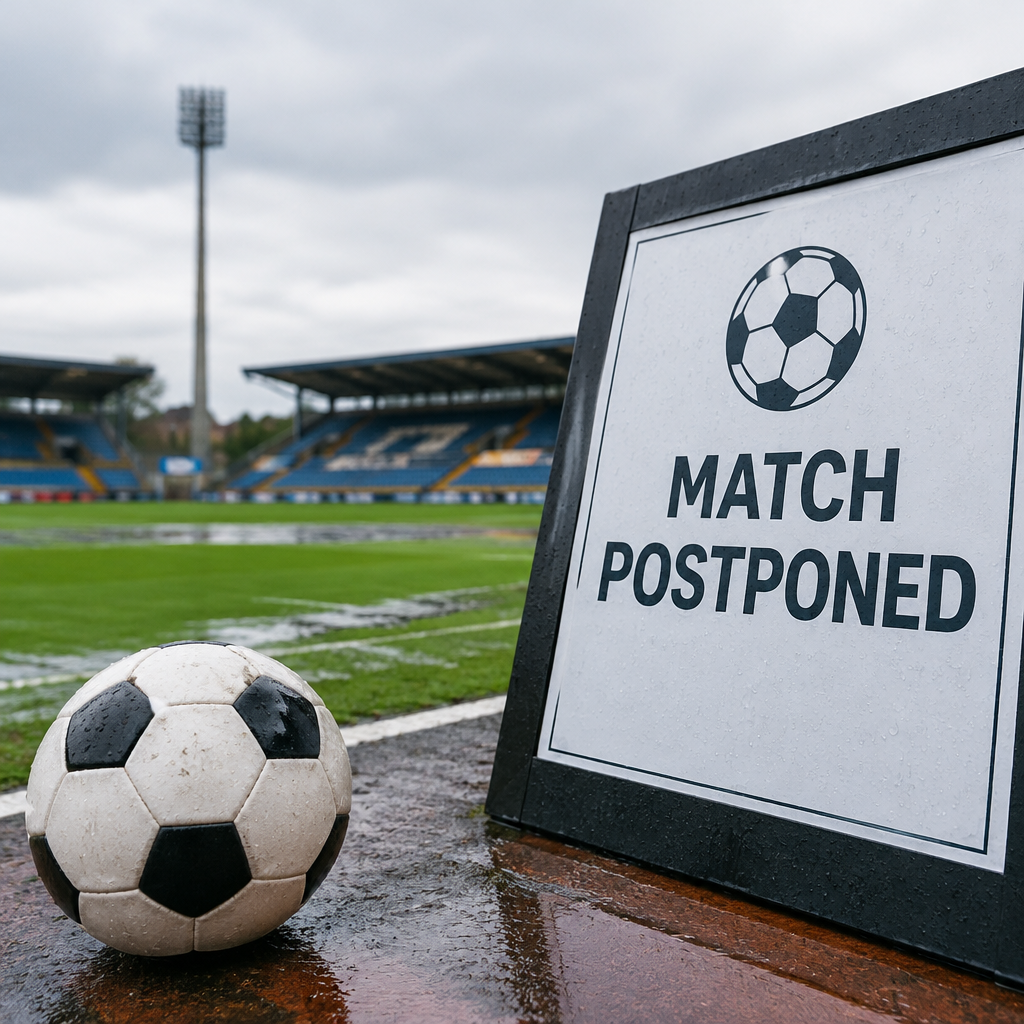
When a football match is postponed, it means the game will not take place at the originally announced time. It does not mean that either team has won, lost or received points. The fixture remains outstanding until the competition organiser confirms a new date and the match is played.
This distinction matters when you are checking football fixtures, results or livescores. A match that disappears from a schedule may not have been cancelled permanently, and a league table may be temporarily incomplete because the two teams have played fewer matches than others.
Advertisement
Table of Contents
Postponed, suspended, abandoned and cancelled: what is the difference?
Football competitions use several terms for matches that do not finish as originally planned. Their exact application can vary between competitions, but the general meaning is different in each case.
- Postponed: The match has not started, or it has been moved before kick-off. It is normally expected to be played later.
- Suspended: The match has started but cannot continue at that time. The competition authority must decide whether it will resume, restart or receive another ruling.
- Abandoned: The match has been stopped before the scheduled end and will not continue as planned. A later decision may determine the outcome or whether the remaining minutes are played.
- Cancelled: The fixture will not take place in its current form. It may be replaced, rearranged or removed from the competition, depending on the rules.
For a postponed match, the safest assumption is that no official result exists yet. Do not treat the postponement as a defeat, a draw or a victory unless the competition’s governing body later publishes an official decision.
Why are football matches postponed?
A match can be postponed for reasons affecting safety, travel, stadium access, scheduling or the ability of teams to participate properly. Common examples include:
- Severe weather or an unsafe playing surface
- Security concerns near the stadium or along travel routes
- Transport problems affecting a team or match officials
- Stadium damage, power problems or other venue issues
- Public-health or emergency restrictions
- Participation in another competition
- International fixtures that affect player availability
- Unexpected events that make the original date impractical
The reason for the change should come from an official league, cup, federation, club or stadium announcement. Social media posts and group-chat messages may spread the news quickly, but they should not be treated as confirmation on their own.
What happens to the fixture?
The original fixture remains part of the competition, but its status changes from scheduled to postponed or rearranged. The competition organiser will normally look for another date that works for both teams, the venue, match officials and broadcast arrangements.
There may not be an immediate replacement date. A new date can depend on the teams’ other fixtures, cup commitments, international windows and stadium availability. This is why a postponed match may appear as “TBC”, “to be confirmed” or “date to be announced” for some time.
When a new date is confirmed, supporters should check whether the kick-off time, venue and ticket arrangements have also changed. A replacement date is not always simply the next available day.
Does a postponed match affect the league table?
Usually, the teams receive no points when a match is postponed. The league table may temporarily show that one or both clubs have played fewer matches than their rivals. Their points totals and goal records remain unchanged until the fixture is played or an official disciplinary decision is issued.
For example, imagine Team A has played 10 matches and Team B has played 11. If their scheduled meeting is postponed, neither team adds a match, point or goal to its record. Team B may still have one more game recorded, but the table is not necessarily comparing clubs with the same number of matches.
This is why looking only at league position can sometimes be misleading. Points per match, remaining fixtures and games in hand may provide more context, although the official table remains the main reference for competition standings.
Can a postponed match change the final standings?
Yes. Once the game is eventually played, its points and goals can affect the title race, qualification places, relegation battle or promotion picture. A single outstanding fixture may become especially important near the end of a season.
The effect depends on the result:
- A win gives the winning team the points allowed by that competition’s rules and leaves the losing team without match points.
- A draw normally gives both teams a point, subject to the competition’s rules.
- The goals scored can affect goal difference or another ranking tiebreaker.
Until the match is played, however, it is wrong to add predicted points to the table. A club may have a game in hand, but it does not have guaranteed points.
What does postponement mean for football results and livescores?
A postponed game should not appear as a normal result. A reliable fixture or livescore service may label it “postponed”, remove the original kick-off time or move it into a section for upcoming rearranged matches.
Different websites and mobile applications may update at different speeds. One platform may continue showing the old time while another already displays the postponement. If the information affects a bet, travel plan or ticket, confirm it through the competition organiser or the clubs involved rather than relying on a single score page.
After the rescheduled match is played, the fixture should be updated with the final score, match statistics and any relevant table changes. The original date should not be confused with the date on which the result was recorded.
What happens to tickets and stadium plans?
Ticket arrangements depend on the organiser, club and venue. In many cases, a ticket bought for the original fixture may remain valid for the rearranged match, but this should never be assumed. Some organisers may offer a refund window or provide separate instructions for supporters who cannot attend the new date.
Before travelling, check:
- Whether the new date and kick-off time are confirmed
- Whether the venue is unchanged
- Whether the original ticket remains valid
- Whether a refund or ticket-transfer process is available
- Whether entry requirements or supporter instructions have changed
This is particularly important for fans travelling between Nigerian cities or following clubs while abroad. Do not make non-refundable travel arrangements based only on an unconfirmed replacement date.
How postponement affects fantasy football and predictions
Fantasy football games and prediction platforms handle postponed fixtures according to their own rules. Players selected from the affected match may remain in a squad, become unavailable for a particular gameweek or be moved to a later scoring period.
Before changing your team, read the relevant game’s rules. Avoid assuming that a player will automatically receive points for a postponed fixture. The same caution applies to prediction contests: a selection may be voided, carried forward or settled under a special rule.
A simple way to verify a postponed fixture
- Check the competition organiser. Look for an announcement from the league, cup organiser or football federation.
- Check both clubs. Official club channels may publish information about tickets, travel and the new date.
- Compare the fixture listing. Confirm that the match is marked postponed rather than completed.
- Wait for a confirmed replacement date. Do not treat “TBC” as a final kick-off time.
- Check the table after the match is played. The official points and goal records should update after the final whistle.
The key point for football followers
A postponed football match is an unfinished fixture, not a football result. No normal points or goals should be added until the game is played, and the league table may temporarily contain clubs with different numbers of matches. When following fixtures and livescores, use the official competition or club announcement to confirm the reason, replacement date, venue and ticket instructions.
Keeping those details separate helps you avoid common errors: reporting a postponed game as a defeat, assuming a club has secured points or travelling to a stadium on the wrong date.
Advertisement