

Advertisement

Advertisement
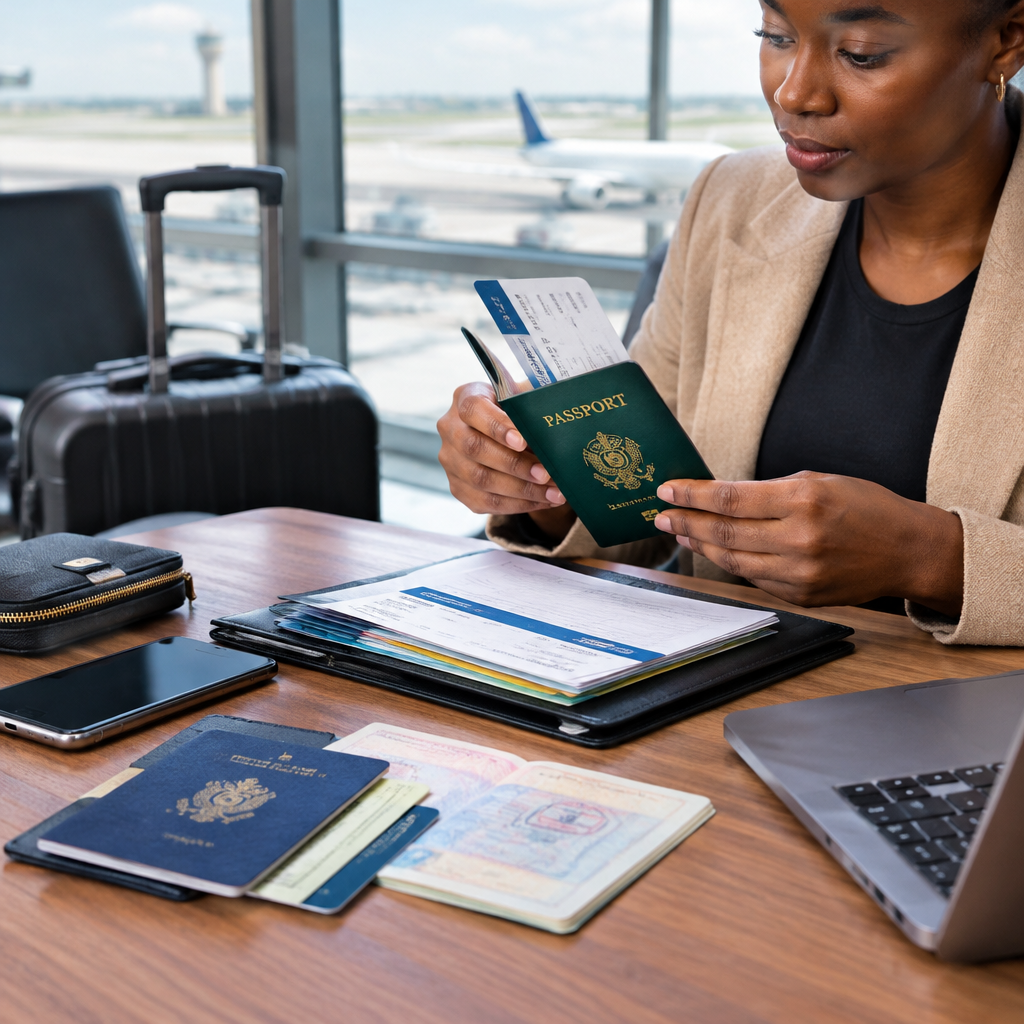
When you travel internationally, your checked suitcase may be delayed, lost or inaccessible until you reach your destination. Your essential travel documents should therefore stay in your hand luggage, not inside your checked baggage.
For Nigerian travellers, this usually means keeping your passport, visa evidence, flight details and other important documents together in a secure, easily accessible folder. The exact requirements depend on your destination, nationality, airline and purpose of travel, so confirm them with the relevant embassy, immigration authority and airline before leaving.
Advertisement
Table of Contents
The essential documents to keep with you
1. Your international passport
Your passport is the most important document in your hand luggage. Check that:
- It is valid for the period required by your destination.
- It has enough blank pages for entry and immigration stamps, where applicable.
- Your name and date of birth match the details on your ticket and other documents.
- The passport is not damaged, torn or heavily worn.
Do not pack your passport in checked baggage. You may need it at airport check-in, security, immigration, boarding and when entering your destination.
Keep the passport in a secure document wallet rather than an open pocket. Avoid handing it to strangers or leaving it unattended at a hotel, airport lounge or transport terminal.
2. Visa or travel authorisation
If your destination requires a visa, carry evidence that the visa was granted. This may be a visa sticker in your passport, a printed approval letter or an electronic authorisation linked to your passport.
Read the visa carefully. Check the permitted entry period, number of entries, length of stay and purpose of travel. A visitor visa, student visa, work visa and transit visa do not necessarily provide the same rights. Having a visa does not always guarantee entry; border officials make the final admission decision under the destination’s rules.
If you are travelling to a country that uses an electronic travel authorisation or online entry approval, save the confirmation offline and keep a printed copy. An internet connection or phone battery may not be available when you need it.
3. Flight booking and itinerary
Keep your booking confirmation or e-ticket accessible. It should normally show your name, route, flight numbers, travel dates and booking reference.
A digital copy on your phone is useful, but a printed copy provides a backup if your phone is lost, damaged or unable to connect to the internet. You may also need proof of onward or return travel, especially where your destination or visa conditions require it.
Check every flight segment if you have a connection. Confirm whether you must collect and recheck baggage, change airports or obtain a transit visa. Do not assume that staying inside an airport always removes transit requirements.
4. Accommodation details
Carry the name, address and contact details of your hotel, host, school or other accommodation. Immigration officials may ask where you will stay and how to contact the person or organisation receiving you.
If you are staying with family or friends, keep any invitation letter or host information that is relevant to your application or entry conditions. The details should match the information you provided during the visa process, where applicable.
Supporting documents that may be important
Not every traveller needs every document below, but keeping relevant evidence in your hand luggage can make questions at check-in or immigration easier to answer.
- Proof of funds: This could include bank statements or other evidence requested during a visa application. Protect statements that contain sensitive financial information and share them only with legitimate officials.
- Travel insurance evidence: Keep your policy number, emergency contact and coverage details if you purchased insurance or if it is required for your trip.
- Invitation, admission or employment documents: Students should carry admission or enrolment information. Workers may need employment or assignment documents. Visitors may need an invitation or accommodation evidence.
- Medical documents: Carry prescriptions, a doctor’s letter where useful and details of essential medication. Keep medicines in their original labelled packaging and check the destination’s rules for controlled or restricted drugs.
- Vaccination or health certificates: Some destinations, routes or transit points may require specific health documentation. Confirm requirements before travel rather than relying on an old checklist.
- Parental consent documents: A child travelling without one or both parents may need consent evidence or additional documents, depending on the countries involved.
- Driving documents: If you plan to drive, check whether you need an international driving permit, your Nigerian licence, insurance or another document.
Keep copies, but protect your personal information
Make clear copies of your passport information page, visa, insurance policy, itinerary and other essential documents. Store one set separately from the originals and give another set to a trusted person at home.
You can also save encrypted or password-protected copies in a secure cloud account. Avoid sending passport scans to unknown agents, random social-media accounts or unofficial websites. A passport copy contains personal information that can be misused for impersonation or fraud.
Copies are backups, not replacements. Airlines, embassies and immigration authorities will often require the original passport or official electronic record.
A simple hand-luggage document system
Use one document wallet with separate sections so that you can find items quickly without spreading them across an airport counter.
- Front section: Passport, boarding pass and any document needed immediately at the airport.
- Travel section: Visa evidence, itinerary, accommodation confirmation and onward-ticket information.
- Supporting section: Insurance, school or employment documents, proof of funds and health records.
- Emergency section: Copies of documents, emergency contacts, embassy details and a written list of important phone numbers.
Keep the wallet in a zipped compartment of your personal item. It should be reachable without opening your main suitcase, but not visible to people around you.
Documents for different types of travellers
Students
In addition to your passport and visa, keep your admission letter, school contact details, evidence of accommodation and any instructions from the institution. If you must complete registration after arrival, save those instructions offline.
Workers and business travellers
Carry employment, assignment, conference or invitation documents that explain the purpose of your trip. Make sure your visa category matches the activity you plan to carry out. Do not rely on a visitor visa for work unless the relevant authority clearly permits it.
Families travelling with children
Keep each child’s passport and travel documents together but do not place the entire family’s originals in one location that could be lost at once. Bring relevant birth, custody or parental-consent documents where required.
Travellers visiting relatives
Keep the host’s address, phone number and invitation details available. Tell your host where your documents are stored and agree on how you will contact each other if your flight is delayed.
Common mistakes to avoid
- Putting your passport or visa documents in checked baggage.
- Relying only on a screenshot when an official document or original may be required.
- Assuming a visa guarantees entry or permits work and study.
- Using a booking name that does not match your passport.
- Leaving your documents in a hotel safe after checking out.
- Giving passport copies, bank statements or login details to unverified agents.
- Failing to check transit requirements for connecting flights.
- Keeping all copies and originals together, so one loss removes every backup.
Before leaving for the airport
Do a final document check at home: passport, visa or travel authorisation, ticket, accommodation details, supporting documents, medical information, copies and emergency contacts. Confirm that your phone is charged and that important files are available offline.
For the most reliable answer, check your destination’s official immigration or embassy website and your airline’s document guidance. Requirements can change, and a document that was accepted on a previous trip may not be enough for a new route or purpose.
The safest approach is simple: keep originals secure, carry relevant supporting evidence, maintain separate backups and verify requirements before travelling. Your hand luggage should contain everything necessary to prove who you are, where you are going and why you are travelling.
Advertisement
