

Advertisement

Advertisement
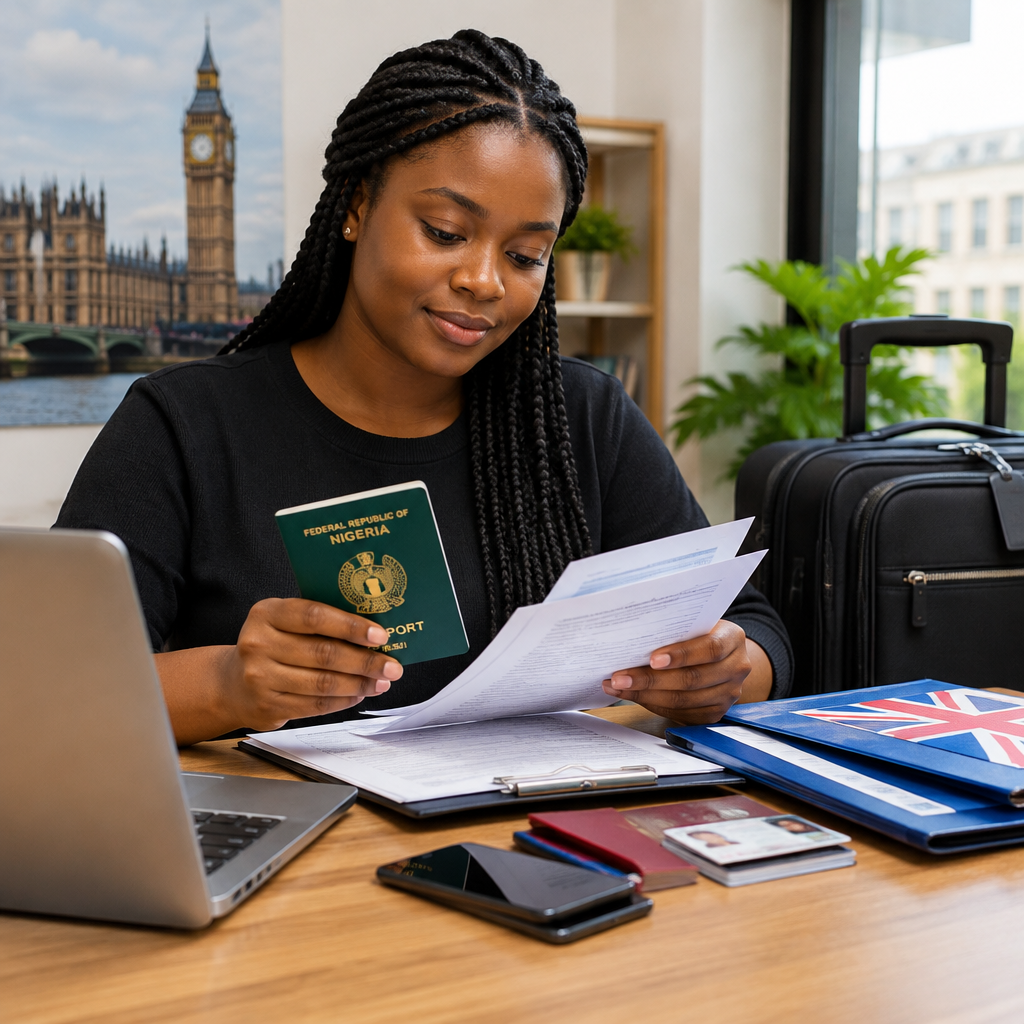
Preparing for travel to the UK is not only about booking a flight and packing clothes. You may also need to show that your trip is genuine, explain how it will be funded and demonstrate where you will stay. If your documents are difficult to find or contain conflicting information, you may face delays, extra questions or problems during the journey.
This guide explains how to organise your evidence before departure. It is useful for Nigerians travelling as visitors, students, workers or family members. It does not guarantee entry or visa approval. Your exact requirements depend on your immigration permission, nationality, purpose of travel and personal circumstances.
Advertisement
Table of Contents
Start with the purpose of your trip
Make a short statement explaining why you are travelling, how long you plan to stay and what you intend to do in the UK. Keep this explanation consistent across your application, supporting documents and answers to questions at the border.
For example, a visitor might need to explain that they are attending a family event and will return to Nigeria after a defined visit. A student should be able to identify their institution and course. A worker should understand the employer and the conditions attached to their permission.
Avoid giving a vague explanation such as “I want to look for opportunities” if you are travelling as a visitor. Do not describe a holiday, study programme or job arrangement differently in different documents.
Create one evidence folder
Use a clearly named physical folder and a secure digital folder. Arrange documents in the same order in both places so that you can find them quickly.
A useful structure is:
- Identity: passport, previous passports where relevant and immigration permission.
- Travel: flight details, transport arrangements and travel insurance if you have purchased it.
- Accommodation: hotel confirmation, tenancy details or an invitation from your host.
- Money: bank statements, sponsorship evidence and proof of income.
- Purpose: invitation letters, school documents, employment documents or event information.
- Family and personal circumstances: evidence that helps explain your situation and, where relevant, your plans to leave the UK.
Do not rely only on your phone. Save copies securely and carry important documents in an accessible hand luggage folder. Avoid storing sensitive documents in an unsecured public computer or sending them casually through social media.
Check identity and immigration documents first
Confirm that your passport is valid for the journey and has enough blank pages for travel processing where required. Check that your name, date of birth and other personal details are consistent across your passport, visa or electronic immigration record, tickets and booking documents.
If your name has changed, or if documents contain spelling differences, prepare evidence explaining the difference. This might include a legal name-change document or marriage certificate, depending on the situation. Do not alter a document yourself.
Make copies of your passport information page and immigration documents. Keep one copy with your luggage and another in a secure online location. You should still carry the original documents required for your journey.
Organise financial evidence clearly
Financial documents should help answer three questions:
- Who is paying for the trip?
- Where did the money come from?
- How will the expenses be covered during the stay?
Depending on your circumstances, evidence may include bank statements, payslips, employment letters, business records or sponsorship documents. If another person is paying, include a clear explanation of the relationship, the support they will provide and evidence that they can provide it.
Large deposits can create questions if they do not match your normal financial activity. Prepare an explanation and supporting evidence for unusual payments, such as the sale of an asset, a business payment or a family contribution. Never create false statements, borrow money temporarily to make your account appear stronger or submit altered documents.
If you are self-employed or run an online business, organise relevant registration, invoices, account statements and tax or business records that genuinely support your circumstances. Only include documents that are relevant and authentic.
Match accommodation evidence to your plans
Your accommodation details should make sense alongside your travel dates and purpose. Check that the names, addresses and dates on hotel bookings, invitation letters and other documents agree with your itinerary.
If you will stay with family or friends, ask your host to provide accurate information about the arrangement. Depending on the application or travel situation, you may need details such as their full name, address, immigration status and relationship to you. Do not claim to stay with someone who is not actually hosting you.
A booking that can be cancelled may be safer than paying for an expensive non-refundable arrangement before a decision, but this is a personal financial choice. Always follow the instructions connected to your visa or travel permission and avoid treating a hotel booking as proof of guaranteed entry.
Prepare purpose-specific evidence
Visitors
Visitors should organise evidence showing the reason for the visit, intended dates, accommodation and funding. An invitation letter can support your explanation, but it does not replace your own evidence or guarantee approval.
Students
Students should keep their institution’s offer or confirmation documents, payment evidence where applicable, accommodation information and any documents required for their immigration route. Check the instructions from the institution and the UK government rather than relying on a social media checklist.
Workers
Workers should keep employment or sponsorship documents, job details and information about the organisation they will work for. Make sure the role, employer and dates agree with the permission granted to you.
Family-related travel
If you are travelling to join or visit family, organise documents showing the relationship and the reason for the trip. Birth, marriage or other civil documents may need to be translated if they are not in English or Welsh, according to the relevant requirements.
Review translations and document quality
Documents that are not accepted in their original language may require a certified translation. Do not assume that using a friend or an unqualified online translator will meet the requirement. Check the relevant official instructions for what a translation must contain.
Scan documents at a readable quality. Make sure every page is visible, including stamps, signatures and transaction information. Do not crop out details simply to make a file smaller. Use simple file names such as Passport_Name.pdf and Bank_Statement_Month-Year.pdf.
Run a final consistency check
Before departure, compare your key documents line by line. Check:
- Your name and date of birth are consistent.
- Your travel dates match your accommodation and purpose.
- Your financial explanation matches your bank records.
- Your sponsor, host, school or employer details are accurate.
- You know the address where you will stay and how you will travel there.
- You have the required original documents and accessible copies.
Ask a trusted person to review the folder. A second reader may notice an unexplained date, missing page or contradictory statement that you overlooked.
Protect yourself from document and visa scams
Be cautious of anyone promising guaranteed UK approval, faster entry or a “special connection” at an embassy or airport. Do not hand over your passport to an unknown agent, share account passwords or send money to a personal account merely because someone uses an official-looking logo.
Use official UK government and carrier guidance for requirements. An agent may help with administration, but you remain responsible for the truth and completeness of information submitted in your name. Keep copies of everything you provide.
What to keep in your hand luggage
Keep your passport, immigration evidence, accommodation details, contact information for your host or institution, travel itinerary and essential medication information in your hand luggage. Do not place critical documents in checked baggage.
You should be able to explain your trip in simple, truthful terms without memorising a speech. If asked a question, answer directly. If you do not understand, ask for the question to be repeated rather than guessing.
Final takeaway
Good UK travel preparation is an organised explanation of your real circumstances. Build your evidence around your purpose, funding, accommodation and identity; check that the details agree; keep originals and secure copies; and verify changing requirements through official sources. For Nigerians preparing for travel or immigration, this simple document system can make the process easier to understand and reduce avoidable mistakes without promising an outcome that no guide can guarantee.
Advertisement
