

Advertisement

Advertisement
A Canada study permit application is not only about uploading many documents. The documents must tell one clear story: who you are, what you plan to study, how you will pay for it and why your application is credible.
For Nigerian students, this means preparing evidence carefully rather than submitting screenshots, unexplained bank statements or files with conflicting information. Requirements can change, so always confirm the latest instructions on the official Immigration, Refugees and Citizenship Canada (IRCC) website and the instructions connected to your application.
Advertisement
This guide explains how to build an organised document package. It is general information, not a guarantee of approval or a substitute for professional immigration advice.
Table of Contents
Start with the main parts of your application
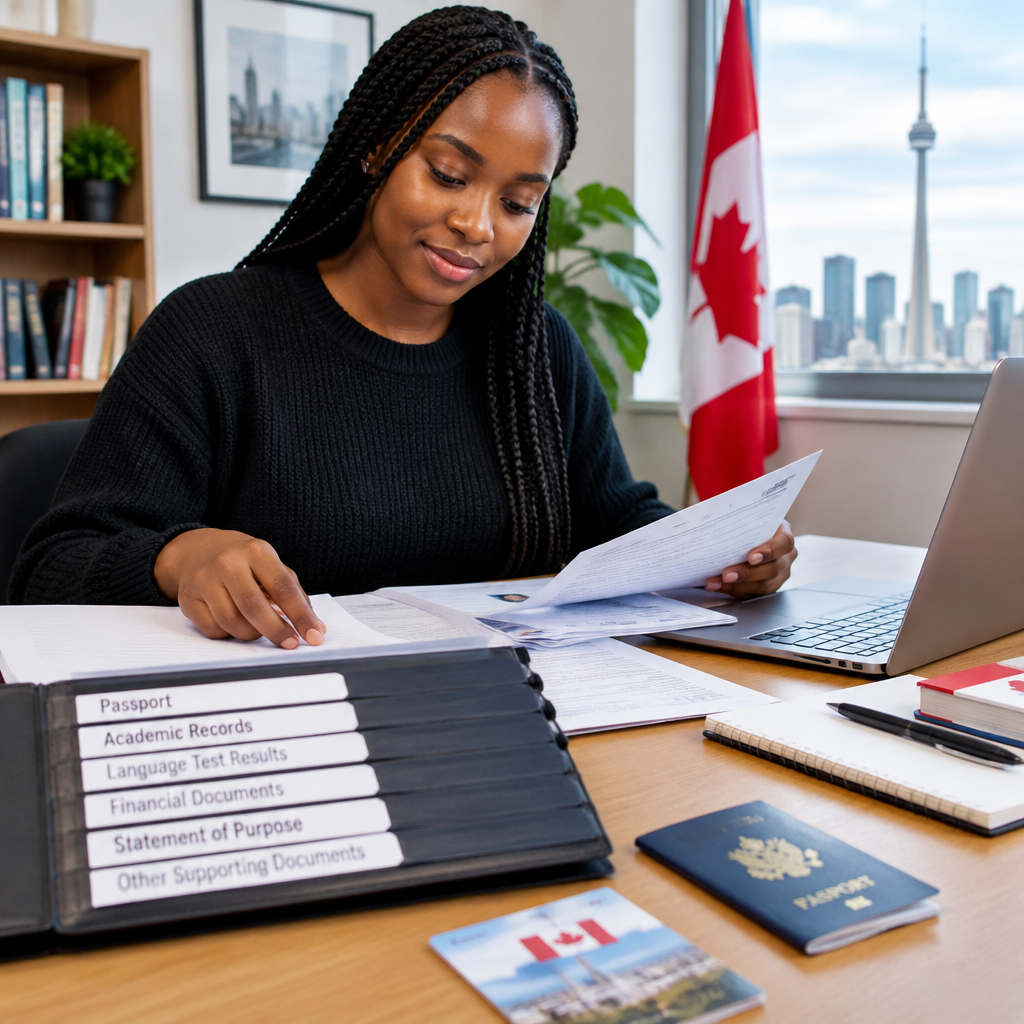
Before scanning anything, create a document plan. Most applicants will need evidence from several categories, although the exact requirements depend on their circumstances, programme and application route.
- Identity and personal information: passport, photographs where requested and civil documents that support your personal details.
- School admission: your letter of acceptance and other documents from the Canadian institution.
- Study plan: information showing what you will study and why the programme makes sense for your background and goals.
- Financial evidence: documents showing how tuition, living expenses, travel and other costs will be covered.
- Academic and professional history: certificates, transcripts, employment records or other evidence relevant to your application.
- Immigration and family information: previous visas, travel history or family documents where applicable.
- Additional forms and explanations: any forms, letters or supporting documents requested by IRCC, a visa office or the online application system.
Do not assume that every applicant needs exactly the same documents. Use the personalised checklist generated for your application, and follow instructions from the Canadian institution and the relevant government authorities.
Build a document tracker before uploading
A simple tracker can prevent missing documents and duplicate uploads. Use a spreadsheet or notebook with these columns:
- Document name
- Who provides it
- Date requested
- Date received
- Expiry date, if any
- Translation required
- File name
- Uploaded or not
- Notes or explanation needed
For example, a Nigerian student may list a passport, admission letter, academic transcript, degree certificate, employment letter, sponsor documents and bank evidence. The tracker should also show whether the name, date of birth and other details match across the documents.
Check consistency across every document
Inconsistency is one of the easiest ways to make an application difficult to understand. Compare your documents line by line before uploading them.
Check the following:
- Your full name is written consistently. If names appear in a different order or spelling, prepare an explanation and supporting civil document where appropriate.
- Your date of birth and passport number match your application form.
- Your education history has no unexplained gaps.
- Your course title, school name and start date agree with the admission letter.
- Your employment history does not conflict with your stated study history.
- Your financial explanation matches the account statements and sponsor documents.
- Your study plan does not describe a different programme or career direction from the one shown in your application.
If a document contains an error, do not edit it yourself. Contact the issuing organisation or explain the issue in a separate letter, with evidence where possible.
Organise financial evidence as a story, not a pile of statements
Financial documents should help the officer understand the source, availability and intended use of the money. A large balance without context may raise more questions than it answers.
Depending on your situation, your financial package may include evidence such as:
- Bank statements or official financial records covering the period requested or appropriate to your application.
- Proof of tuition payments, if you have already paid any amount.
- Evidence of a scholarship, education loan or other confirmed funding.
- A sponsor letter explaining the relationship between you and the sponsor and what costs the sponsor will cover.
- Evidence of the sponsor’s income, employment, business activity or assets, where relevant.
- Documents explaining a significant recent deposit or transfer.
Avoid relying on a single unexplained deposit shortly before applying. If funds came from the sale of property, a business transaction, a loan or another legitimate source, include documents that explain the transaction. The explanation should be truthful and should not overstate what the evidence proves.
Do not send passwords, PINs, one-time passwords, card security codes or online banking login details. Banks and immigration authorities should not require you to reveal those private security details.
Prepare your study plan around genuine logic
A study plan should explain your proposed education clearly. It is not a place for dramatic claims or copied language from another applicant.
Address questions such as:
- Why did you choose this programme?
- How does it connect with your previous education, work or skills?
- Why is this programme and institution suitable for your goals?
- How will you fund the studies?
- What career or educational direction do you expect after the programme?
- What responsibilities, family ties, employment prospects or other circumstances are relevant to your temporary stay, where applicable?
For example, a Nigerian technology worker applying for a programme related to data analysis should explain the connection between previous work, the new course and a realistic career plan. The explanation should match the applicant’s documents and should not claim employment, qualifications or future arrangements that cannot be supported.
Handle translations and file quality properly
Documents that are not in English or French may require a translation that follows IRCC’s rules. Do not translate important documents casually or ask a friend to produce an informal version without checking the official requirements.
Keep both the original document and the translation when the instructions require them. Make sure names, dates, stamps, signatures and page numbers remain readable.
Before uploading:
- Scan documents clearly rather than photographing them in poor lighting.
- Include every page, including pages marked “blank” where they form part of an official document.
- Use a file format and size accepted by the application system.
- Give files clear names, such as Passport_FullName.pdf or BankStatements_Jan-April.pdf.
- Open each file after saving it to confirm that it is complete and readable.
- Keep a copy of everything submitted.
Use a letter of explanation when context is important
A letter of explanation can make unusual circumstances easier to understand. It should not be used to hide missing evidence or replace a document that is specifically required.
Useful reasons for an explanation may include a name difference, an education gap, a change of career direction, an unusual deposit, a missing historical document or a previous refusal. Keep the letter factual and organised:
- State the issue clearly.
- Give the relevant dates and background.
- Refer to the supporting documents.
- Explain what has changed or why the document is unavailable.
- End with a short, accurate summary.
Avoid emotional language, accusations and promises of guaranteed success. Clear evidence is more useful than a long story.
Final review: the five-minute consistency test
Before submitting, ask someone you trust to review the application as if they know nothing about you. Can they answer these questions from the documents?
- Who is the applicant?
- Which Canadian programme and institution did the applicant choose?
- Why does the programme fit the applicant’s background?
- Where will the money come from?
- Are the documents complete, readable and consistent?
Then compare your final package with the current IRCC instructions, the application checklist and any instructions from your school or visa office. Requirements, forms and financial rules can change, so old social media posts and copied checklists may be incomplete.
The strongest document package is not necessarily the largest one. It is the one that is truthful, complete, easy to follow and supported by evidence. Arrange your Canada study permit documents so that an officer can understand your identity, education plan and finances without having to guess what each file means.
Advertisement
