


Advertisement
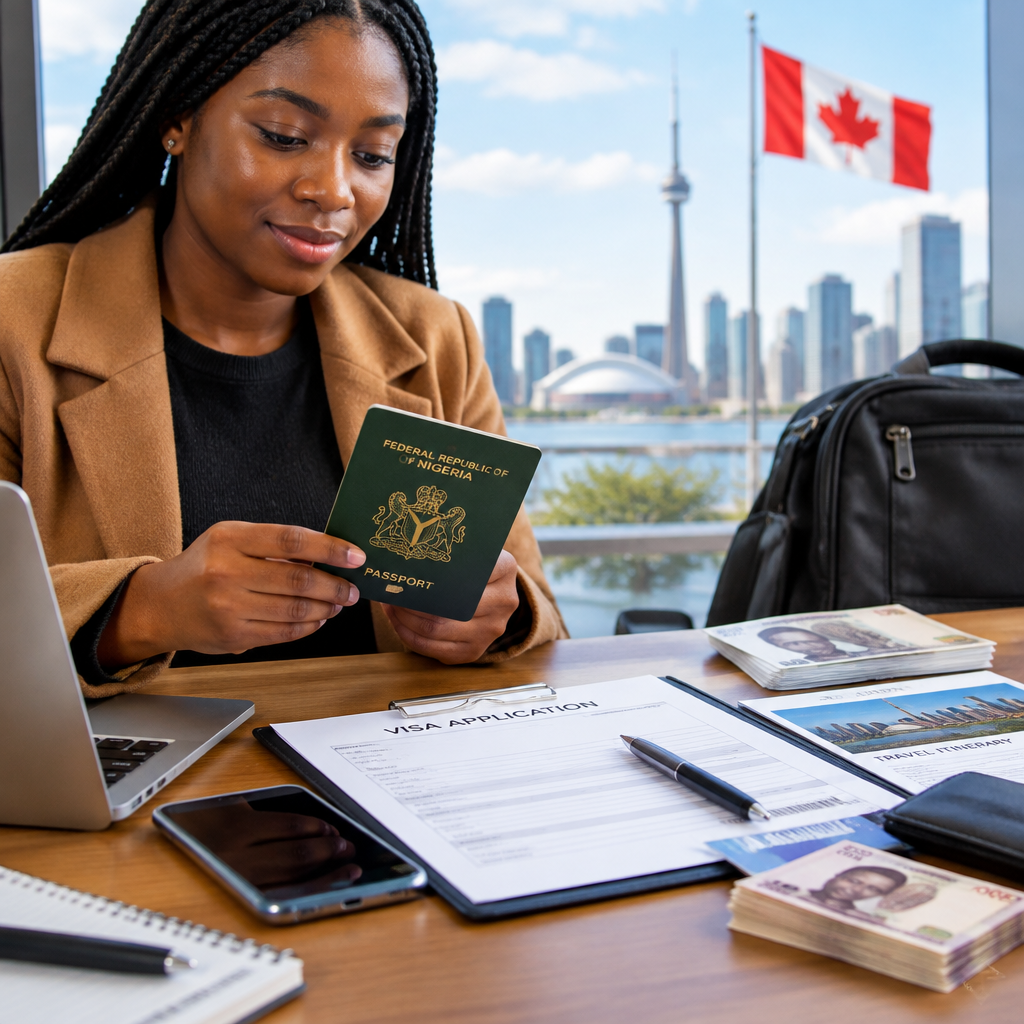
If you are travelling from Nigeria to Canada for a holiday, family visit, business meeting or another short stay, preparing the right documents is essential. A missing document does not automatically mean your application will be refused, but incomplete or unclear information can create delays or make it harder to show that you are a genuine temporary visitor.
Nigerian passport holders normally need a Canadian visitor visa before travelling to Canada. The exact requirements can depend on your purpose of travel, personal circumstances and the documents requested by Immigration, Refugees and Citizenship Canada (IRCC). Use this checklist as a preparation guide, then confirm the latest instructions on the official Canadian government website before submitting an application.
Advertisement
Table of Contents
1. Valid Nigerian passport
Your passport is the main identity and travel document for the application. Check that:
- It is valid for the period of your planned trip.
- It has enough blank pages for visas and immigration stamps.
- Your name, date of birth and other personal details are correct.
- You upload clear copies of the biographical page and any pages showing relevant visas, stamps or travel history.
If you have old passports, include copies of previous visas and international travel where they help explain your travel history. Do not submit altered, cropped or unreadable documents. If your name has changed, prepare evidence such as a marriage certificate, court document or other relevant legal record.
2. Canadian visitor visa application
For a normal short visit, you will generally apply for a Canadian visitor visa, also called a temporary resident visa. The application is usually completed through the official IRCC online process. Follow the document list generated for your individual application rather than relying only on a general internet checklist.
Before applying, be clear about your purpose. A visitor visa may cover activities such as tourism, visiting relatives or attending certain business activities. It is not a general work or study permission. If you plan to work, study for a longer period or remain in Canada permanently, you may need a different type of application.
Keep copies of the forms and documents you submit. Your answers should be consistent across your forms, passport, travel plan, invitation letter and financial records.
3. Passport photographs and identity information
The application may require photographs that meet Canadian specifications. Use a professional photographer familiar with visa photographs and follow the required size, background and file rules. A photograph that is too old, incorrectly sized or digitally modified may not be accepted.
You may also be asked for personal information about your family, employment, address and travel history. Complete these sections carefully. Do not leave unexplained gaps in your travel or employment history when the form asks for a continuous record.
4. Biometrics appointment documents
Many temporary resident applicants must provide biometrics, which normally means fingerprints and a photograph. After submitting the application, you may receive a biometric instruction letter explaining what to do next.
Take the following to your biometrics appointment:
- Your valid passport.
- Your biometric instruction letter, if issued.
- Any appointment confirmation or identification requested by the visa application centre.
Do not assume that a previous biometric submission always removes the need to provide biometrics again. Check the instructions attached to your current application and respond within the stated period.
5. Proof of funds
You need to show that you can reasonably pay for your visit without depending on unauthorised work in Canada. There is no single amount that suits every applicant. The appropriate funds can depend on the length of the trip, accommodation, flights, activities, number of travellers and whether someone else will pay.
Useful financial documents may include:
- Recent bank statements covering the period requested by the application instructions.
- Evidence of regular income, such as payslips or employment records.
- Tax or business records, where relevant.
- Evidence of savings, investments or other legitimate funds.
- A sponsor’s financial documents if another person will pay for the trip.
A large deposit shortly before applying may require an explanation. Never submit edited bank statements or borrowed funds that you cannot explain. False or misleading documents can have serious immigration consequences.
6. Proof of employment, business or study in Nigeria
One important part of a temporary visitor application is showing why you are likely to return after your visit. Documents should reflect your real situation rather than trying to create artificial “ties”.
Depending on your circumstances, this could include:
- An employment letter confirming your role, salary, approved leave and expected return to work.
- Recent payslips or workplace identification.
- Business registration, contracts, invoices or tax records for a business owner.
- School or university enrolment records and an approved absence letter for a student.
- Evidence of close family, property or other ongoing responsibilities, where relevant.
No single document guarantees approval. The officer may consider your overall circumstances, the purpose of the trip, your finances and the consistency of your explanation.
7. Invitation letter and host documents
If you are visiting family or friends, ask your host to provide a clear invitation letter. It should explain:
- The host’s full name, address and contact details.
- Your relationship with the host.
- The reason for your visit and expected dates.
- Where you will stay.
- Who will pay for flights, accommodation and daily expenses.
Your host may also provide proof of status in Canada, such as a copy of a passport, permanent resident document or other appropriate evidence. An invitation letter supports your explanation, but it does not guarantee that a visa will be approved.
8. Travel itinerary and accommodation evidence
Prepare a simple, believable travel plan. It can include your proposed arrival and departure dates, cities you intend to visit, planned activities and accommodation arrangements.
If you will stay in a hotel, include a reservation or booking information where appropriate. If you will stay with a host, the invitation letter should explain the arrangement. Avoid making expensive, non-refundable bookings before you are confident about the visa decision. A reservation is not proof that a visa must be granted.
9. Letter of explanation
A short letter of explanation can help organise your application, especially if your situation needs context. Explain the purpose of the trip, the proposed duration, who is paying, where you will stay and why you will return to Nigeria.
Use plain language and address unusual issues directly. For example, explain a recent job change, a large bank deposit, a previous refusal, a long gap in travel history or a mismatch in names. Do not use a dramatic story or make claims that cannot be supported by documents.
10. Additional documents that may apply
Some applicants may need or benefit from additional documents depending on their circumstances:
- Marriage certificates or birth certificates to prove family relationships.
- Evidence of previous visa refusals or immigration history, if requested.
- Parental consent documents for a minor travelling without one or both parents.
- Medical examination evidence if IRCC instructs you to complete one.
- Certified translations for documents that are not in English or French.
Do not arrange a medical examination or provide extra documents based only on advice from an unverified agent. Follow the official instructions for your application.
Final document check before submission
- Check that your name and date of birth match across documents.
- Scan every page clearly and keep the originals safe.
- Translate documents when required, using an acceptable translator or process.
- Make sure your travel dates and purpose are consistent everywhere.
- Review every form before signing or submitting it.
- Pay fees only through the official Canadian government application process.
- Keep your application number, payment receipt and submission confirmation.
Be careful with agents who promise guaranteed approval, ask you to submit false documents or request payment into a personal account. You remain responsible for the information in your application, even when someone else completes the forms.
Useful takeaway
A strong Canada visitor visa application is not simply a large collection of papers. It is a consistent explanation supported by genuine documents: a valid passport, a clear reason for travel, credible finances, realistic accommodation and evidence that your visit is temporary. Start with the official IRCC checklist for your application, prepare early and never replace missing evidence with altered or invented documents.
Advertisement
