

Advertisement

Advertisement
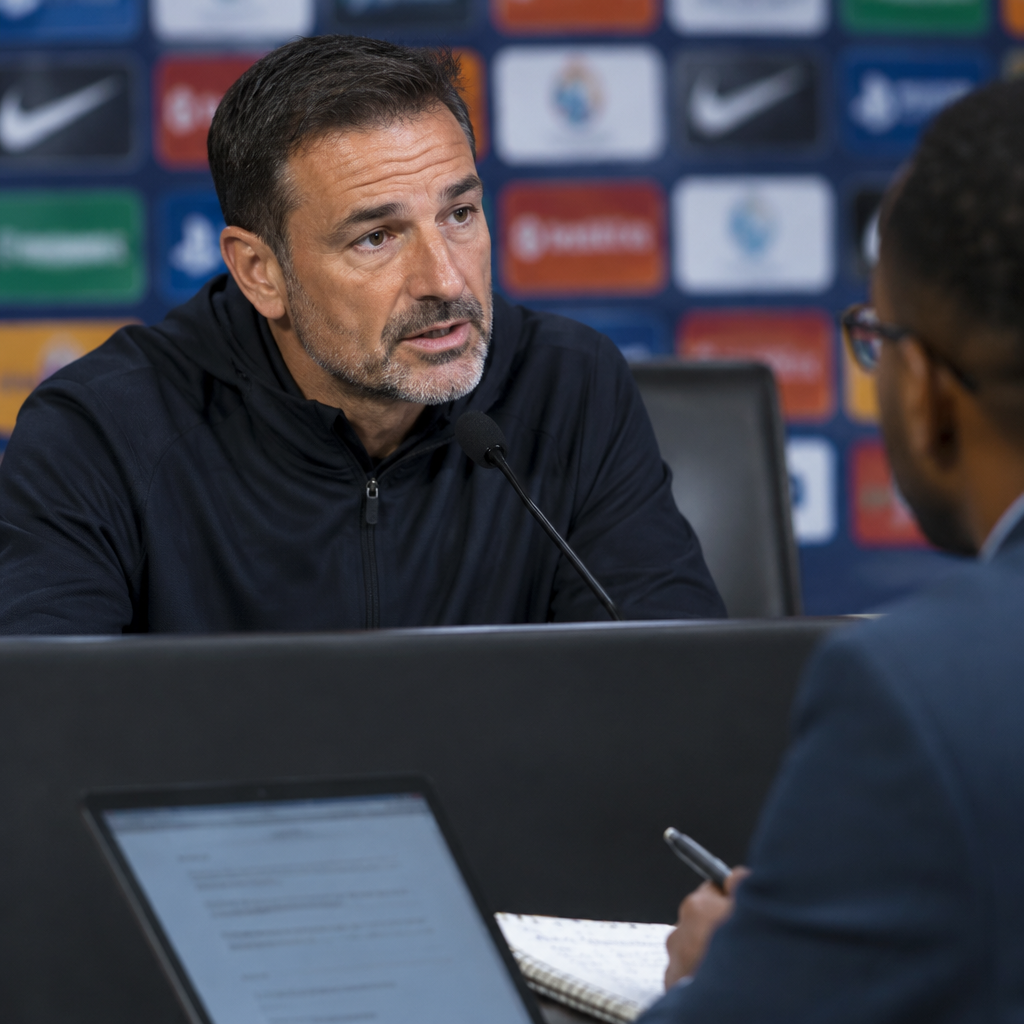
A football manager’s post-match interview can sound simple: praise the players, explain the result and discuss what happens next. But these comments often contain more information than the manager appears to say directly.
For football followers in Nigeria and elsewhere, learning how to read these interviews can make match reports, team news and football discussions more meaningful. The key is to separate three things: what the manager confirms, what the manager believes and what the manager may be choosing not to reveal.
Advertisement
Table of Contents
Start with the result, but do not stop there
The final score creates the first impression. A manager who wins may sound satisfied, while a manager who loses may appear disappointed or defensive. However, the score alone does not explain how the match was played.
When reading post-match comments, compare the manager’s words with what happened on the pitch:
- Did the team control possession but create few clear chances?
- Did the team defend deeply and rely on counterattacks?
- Did the opponents create dangerous opportunities despite losing?
- Did the team improve or decline after substitutions?
- Was the result affected by a red card, penalty, injury or individual error?
A manager may describe a win as “deserved” because the team followed its plan, even if the performance was not attractive. Another may say the team was “unlucky” after a defeat because the players created chances and conceded through a small mistake. The useful question is not whether the manager sounds positive or negative. It is whether the explanation fits the match.
Understand the difference between facts and opinions
Post-match comments usually combine observable facts with interpretation. Facts can often be checked from the match itself or an official match report. Opinions reflect the manager’s judgement.
For example, these are different types of statements:
- Fact: “We made two substitutions at half-time.”
- Tactical explanation: “We changed the shape to protect the wide areas.”
- Opinion: “We were the better team.”
- Emotional reaction: “The result is very painful.”
- Future signal: “We need to improve in the final third.”
None of these statements should automatically be treated as the complete truth. A manager may genuinely believe the team was superior, but another observer may interpret the match differently. Good football coverage should make that distinction clear instead of presenting every comment as an established fact.
Look for tactical clues
Managers often use post-match interviews to explain why they selected a formation, changed the team’s approach or made substitutions. These explanations can help you understand the match beyond the basic result.
Formation and team shape
If a manager mentions playing with “three at the back”, “an extra midfielder” or “two strikers”, the comment may explain how the team tried to create an advantage. A team can begin in a 4-3-3 formation, for example, but change its shape when it has the ball or when it is defending.
Do not focus only on the formation written before kick-off. Ask what the team actually did:
- Did the full-backs move forward to support attacks?
- Did a midfielder drop between the defenders?
- Did the wingers move inside?
- Did the striker press the opponents’ defenders?
- Did the team protect a lead by adding another defender or midfielder?
Pressing and possession
Words such as “pressing”, “intensity”, “building from the back” and “controlling the game” are common in football interviews. Their meaning depends on the context.
When a manager praises pressing, the team may have tried to win the ball quickly after losing it. When the manager discusses building from the back, the team may have attempted to begin attacks through the goalkeeper and defenders rather than playing long passes immediately.
Possession is also not the same as control. A team can keep the ball without creating serious chances. It can also have less possession but remain dangerous through quick attacks. Look at where the possession occurred and what the team did with it.
Pay attention to comments about mistakes
Managers do not always name the player responsible for an error. Instead, they may speak about “collective responsibility”, “better concentration” or “defending as a unit”. This can indicate that the manager wants to protect a player publicly while addressing the problem internally.
There are several common explanations for a goal conceded:
- Individual error: one player loses possession or makes a poor decision.
- Communication problem: defenders fail to coordinate their movements.
- Structural problem: the team leaves too much space between positions.
- Execution problem: players understand the plan but fail to perform it correctly.
- Decision-making problem: the team chooses the wrong pass, tackle or attacking option.
A manager who says, “We must learn from this,” may be referring to a repeated issue rather than one isolated mistake. Compare the comment with earlier performances before deciding whether the problem is temporary or part of a pattern.
Read player comments carefully
Questions about individual players often produce useful clues, but they must not be overinterpreted. A manager may praise a substitute for changing the game, explain why a regular starter was left out or say that an injured player will be assessed.
Words such as “we will see”, “he needs to work”, “he is not ready” and “it was a tactical decision” can have different meanings. They may point to fitness, form, discipline, competition for places or a particular tactical requirement.
However, a single interview does not prove that a player is leaving the club, has fallen out with the manager or has been dropped permanently. Such claims require stronger evidence. Treat rumours and social media interpretations as separate from the manager’s confirmed words.
Recognise the difference between an injury update and a guess
Managers are often asked about injured players immediately after a match. Their answer may be limited because medical tests have not been completed. Phrases such as “we need to assess him”, “it does not look good” or “we hope it is not serious” show uncertainty.
Only treat the information as confirmed when the club or another authoritative source provides a clear update. A manager’s initial reaction can be useful, but it should not be turned into a definite diagnosis or return date.
Understand why managers use careful language
Post-match interviews are not private tactical meetings. They are public communication. A manager may be speaking to supporters, players, club officials, opponents and journalists at the same time.
This affects the language used. A manager may:
- Protect a player from public criticism.
- Keep an upcoming tactical plan private.
- Reduce pressure after a poor result.
- Give confidence to the squad after a difficult match.
- Send a message to players without naming them.
- Challenge the club to improve recruitment or squad depth.
This does not mean every statement is an excuse or coded message. It means the audience and timing matter. A comment made immediately after an emotional defeat may be less measured than one given later, after the manager has reviewed the match.
A practical way to analyse any interview
Use this five-question method when reading a manager’s post-match comments:
- What is confirmed? Identify the score, substitutions, visible incidents and any clearly stated information.
- What is the manager’s interpretation? Note claims about control, effort, luck, tactics or performance.
- What problem has been identified? Look for repeated references to defending, finishing, concentration, fitness or decision-making.
- What may change next? Consider comments about returning players, squad rotation, tactical adjustments or the need for improvement.
- What remains uncertain? Mark injury doubts, transfer speculation, unnamed criticism and predictions as unconfirmed.
For example, if a manager says the team was good in possession but poor in the final third, the likely lesson is not simply “the team played well”. It may mean the team reached attacking positions but lacked accurate final passes, movement or finishing. Match footage, chance quality and the team’s next selection can help test that interpretation.
Do not mistake media headlines for the full message
Football headlines often highlight the most dramatic sentence from an interview. A headline may say that a manager “blames the referee” or “attacks his players”, while the complete interview shows a more balanced explanation.
Read the full comment where possible. Check whether a sentence was a direct answer to a specific question, whether important words were omitted and whether the manager also accepted responsibility. This is especially important when following football news quickly on mobile devices.
The main takeaway
A post-match interview is best understood as a mixture of match analysis, public communication and emotion. Read beyond the result, separate facts from opinions, connect tactical language to what happened on the pitch and treat injury or transfer speculation cautiously.
The most reliable interpretation is usually the one supported by several pieces of evidence: the manager’s words, the team’s tactical behaviour, repeated performance patterns and later official updates. That approach helps football readers enjoy the drama without accepting every headline or soundbite at face value.
Advertisement
