

Advertisement

Advertisement
Online marketplaces make it easier to buy phones, laptops, fashion items, vehicles, furniture and household goods from sellers across Nigeria. They also give scammers a convenient way to copy genuine listings, impersonate businesses and pressure buyers into sending money.
The safest approach is not to assume that a polished profile or attractive price proves anything. Before paying, verify the seller, inspect the item as far as possible and choose a payment method that gives you a reasonable chance of resolving a problem.
Advertisement
Table of Contents
Warning signs that a marketplace listing may be a scam
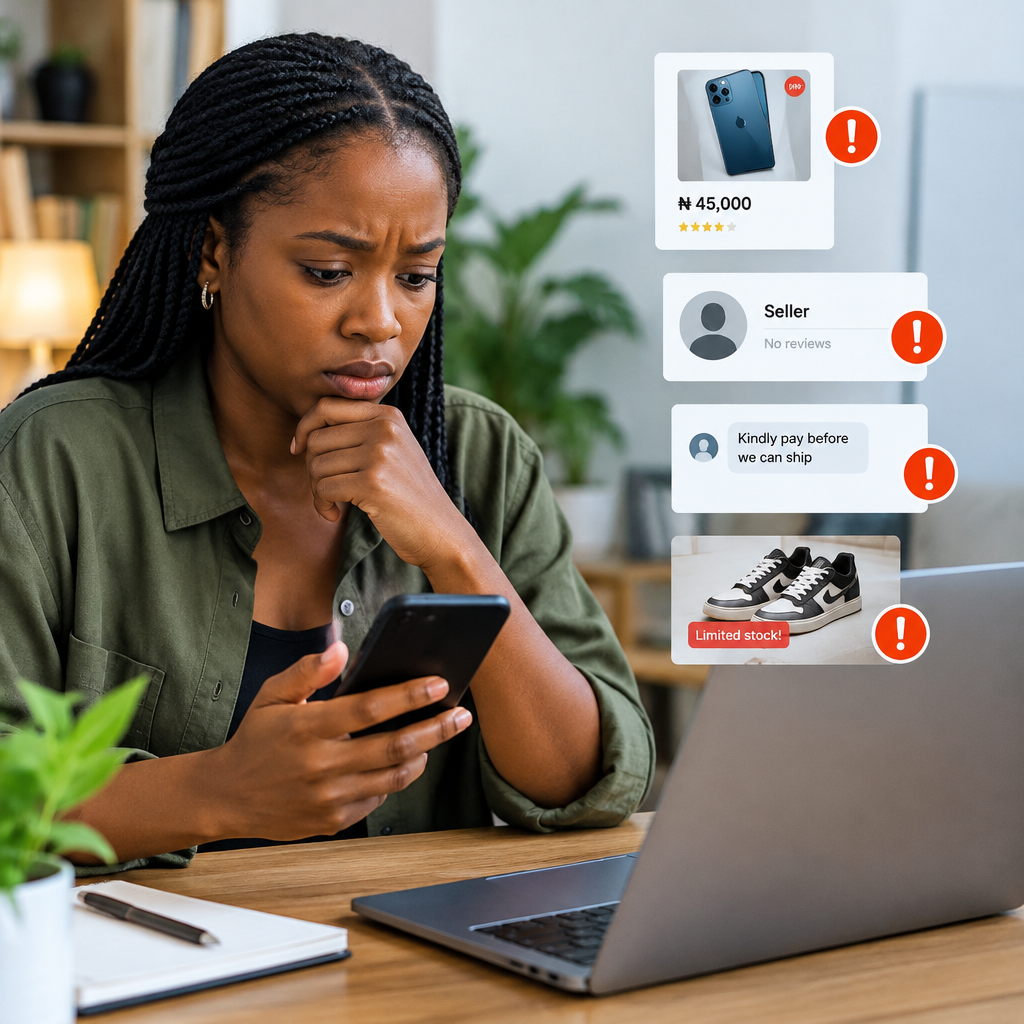
1. The price is far below the normal range
A very low price can be genuine, especially when someone needs to sell quickly. However, an unusually cheap iPhone, laptop, vehicle or imported product should make you pause. Scammers often use a bargain to make buyers act before they ask questions.
Compare similar listings on the same platform and on other reputable marketplaces. Ask why the item is being sold cheaply. A vague answer, such as “urgent need” without any clear explanation, is not proof of fraud.
2. The seller creates artificial urgency
Be careful when a seller says that several people are waiting, the price will increase within minutes or you must pay immediately to reserve the item. Pressure reduces the time available for checking details.
A genuine seller may have other interested buyers, but you should still be able to request basic information and consider the transaction. If the seller becomes abusive or threatening because you want to verify the deal, stop communicating.
3. The seller wants to leave the marketplace immediately
Scammers may ask you to continue the conversation on WhatsApp, Telegram or a private social-media account. Moving to another platform is not automatically suspicious, but it can remove marketplace records, reporting tools and any buyer protection the platform provides.
Keep important communication inside the marketplace until you have verified the seller. If you move to another app, save the listing, profile details, messages and payment information.
4. The photos look copied or do not match
Some fraudsters copy photographs from a legitimate seller or an old listing. Look for inconsistent backgrounds, different product colours, mismatched specifications or images that appear professionally taken but do not show the exact item.
Ask the seller for a fresh photograph showing the item with a handwritten note containing the current date or your name. This does not guarantee that the seller is genuine, but refusal to provide reasonable proof is a warning sign.
5. The seller avoids a video call or physical inspection
For expensive goods, request a live video showing the item from different angles. For a phone or laptop, ask the seller to show the device turning on and display details such as storage capacity, model information and condition.
If possible, inspect the item at a safe public location before payment. For vehicles, property-related goods or high-value equipment, involve someone knowledgeable. Do not visit an unfamiliar location alone, and do not allow a seller to rush the inspection.
Payment requests that deserve extra caution
Full payment before inspection
Paying the entire amount before seeing the item creates significant risk. A scammer may disappear, send a different product or claim that a delivery problem requires another payment.
Where the marketplace offers an official checkout, escrow or buyer-protection process, understand how it works and use the platform’s genuine payment page—not a link sent by a stranger. If there is no protection, consider a transaction method that allows you to inspect the item before completing payment.
Requests for extra fees
After receiving a deposit, a fraudster may demand money for insurance, customs clearance, dispatch, account activation, refundable security or release from a supposed government office. These explanations can sound official but may be invented.
Do not send additional money simply because you have already paid. Pause and verify the claim independently. A request for repeated payments is often a sign that the original transaction is not genuine.
Payment to a different person’s account
The name on the receiving account may not match the seller’s name. There can be legitimate reasons for this, but the mismatch should be explained and documented before payment. Be especially cautious when the seller claims that a friend, driver, agent or relative must receive the money.
Never share your bank password, card PIN, one-time password, authentication code or recovery phrase with a seller. A legitimate buyer-seller transaction does not require these secrets.
How to verify a seller before buying
- Review the profile: Check how long the account has existed, previous listings, ratings and comments. Treat a new profile or copied-looking reviews cautiously.
- Ask specific questions: Request the item’s condition, location, ownership details where relevant, warranty status and reason for sale. Compare the answers with the listing.
- Check the contact details: Search the phone number, business name or account name online for complaints or warnings. A clean search does not prove legitimacy, but repeated scam reports are important.
- Confirm the exact item: Request current photos or a video. For electronics, check the model, serial details and accessories during inspection.
- Plan a safe handover: Meet in a busy public place during daylight. For a high-value purchase, bring a trusted person and arrange an appropriate inspection.
- Keep records: Save screenshots of the advert, seller profile, messages, receipts, account details and delivery information.
A safer workflow for online shopping
Consider this example: you find a laptop advertised at a price much lower than comparable listings. Instead of sending a deposit immediately, you ask for a current video, confirm the seller’s location, compare the specifications and arrange to test the laptop in a public place.
During the inspection, check that the laptop starts properly, matches the advertised model and has the promised accessories. Confirm the final price and payment details in writing. Only then should you complete the transaction, and you should collect a receipt or other proof of purchase.
This process may cause you to lose a tempting bargain if another buyer pays first. That is safer than losing the full amount to a seller who never intended to deliver anything.
If you think you have been scammed
Act quickly, but do not send more money to “unlock” a refund. Contact your bank or payment provider through its official customer-service channel and explain what happened. Ask whether any action is possible on the transaction.
Report the seller and listing to the marketplace. Preserve screenshots, usernames, phone numbers, account details, receipts, tracking information and message history. If the loss is significant or the seller used threats or impersonation, consider reporting the matter to the appropriate Nigerian law-enforcement or cybercrime authorities.
Change any password that may have been exposed. If you shared an OTP, card detail or account login, contact the relevant provider immediately. Warn friends or family only with accurate information, and avoid publishing private details that could expose you to further harm.
What a trustworthy seller usually accepts
A reliable seller should be able to answer reasonable questions, provide consistent information and allow an appropriate way to verify the item. They may not agree to every request, but they should not demand secrecy, rush you without explanation or ask for sensitive security credentials.
Remember that reviews, verified badges and attractive branding can be copied or manipulated. They are useful clues, not guarantees. The strongest protection is a combination of independent checks, safe inspection, controlled payment and complete records.
Before buying, slow down when the deal feels unusually good. Verify the person, verify the item, protect your payment and walk away when the seller’s behaviour creates more pressure than confidence.
Advertisement
