

Advertisement

Advertisement
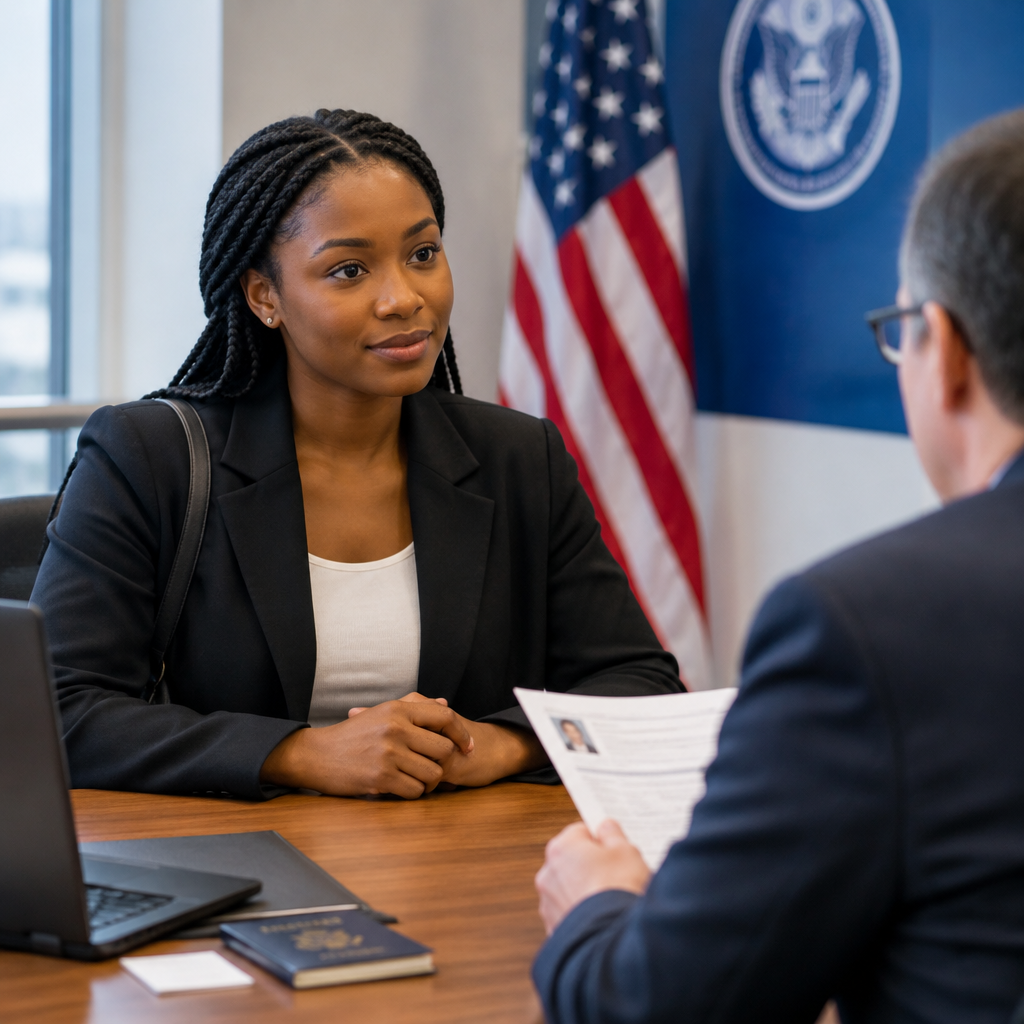
Additional questions at a US visa interview do not automatically mean that your application is failing. A consular officer may ask follow-up questions when they need to understand your travel purpose, personal circumstances, finances, previous travel or plans in the United States.
The best preparation is not memorising a speech. It is making sure your application is truthful, your documents are consistent and you can explain your situation clearly in your own words.
Advertisement
Table of Contents
Why a consular officer may ask extra questions
Visa interviews are usually brief, but the officer may ask more questions if an answer needs clarification or if information in your application requires further explanation. For example, the officer may want to understand:
- Why you are travelling to the United States
- How long you intend to stay
- Who will pay for your trip
- What you do in Nigeria
- Why you chose a particular school, conference, employer or travel destination
- Whether you have close relatives or contacts in the United States
- Your previous international travel or visa history
- How your plans fit with the type of visa you requested
Follow-up questions can also happen when your spoken answer differs from your DS-160, supporting documents or earlier visa applications. This is why preparation should focus on accuracy and consistency rather than trying to predict every possible question.
Review your application before the interview
Read your completed DS-160 carefully before attending the interview. Pay attention to dates, addresses, employment history, education, travel history, family information and the purpose of your trip.
Make a simple timeline of important events. For example, a student applying for a visitor visa should know when they started school, what they are studying, when their break ends and why they plan to return. A worker travelling for a conference should be able to explain their job, the event, the employer’s role and the expected return date.
If you discover a mistake in your application, do not hide it. Seek guidance through the official US visa application or embassy channels about the appropriate way to correct or explain it. Never submit false information simply because you think it will make your case look stronger.
Prepare the core explanation for your trip
You should be able to explain your trip in one or two clear sentences. Your answer should cover the purpose, destination and expected duration.
For example:
“I am travelling to attend a professional conference in Chicago for five days. My employer is paying for the trip, and I will return to Nigeria to resume work after the conference.”
This is better than giving a long, unfocused story. If the officer needs more information, answer the follow-up directly.
Your explanation must match your visa category. A visitor visa is not a work permit, and a student visa is different from a temporary employment visa. Do not describe plans that are outside the purpose of the visa you are seeking.
Expect questions about your finances
Financial questions are intended to help the officer understand how the trip will be funded and whether the proposed plans are realistic. Be ready to explain:
- Your source of income
- Your employer, business or school
- Who is paying for flights, accommodation and daily expenses
- Why another person or organisation is sponsoring the trip, if applicable
- How the cost relates to your financial circumstances
Do not claim that you are paying for the trip if someone else is sponsoring you. If a parent, employer, school or organisation is providing support, explain the arrangement truthfully and carry relevant evidence where appropriate.
A bank statement by itself does not explain every financial situation. The officer may also consider your employment, business activity, family responsibilities, education and the purpose of travel. Do not borrow money temporarily just to create a misleading impression.
Be ready to explain your ties and return plans
For many temporary visa applications, the officer may ask questions about what will bring you back to Nigeria after the trip. Your answer should be based on your real circumstances, not a rehearsed promise.
Relevant circumstances may include:
- Ongoing employment or an approved leave period
- School, professional training or examinations
- A business that you actively manage
- Immediate family responsibilities
- Property or other legitimate commitments
- A clearly scheduled event or obligation in Nigeria
Having relatives in the United States is not automatically disqualifying. However, you should answer honestly if asked who you know there, what your relationship is and whether you plan to visit them. Never hide a relative or contact because you fear the answer will be viewed negatively.
Questions about previous refusals, travel or overstays
If you have previously been refused a US visa, say so when asked and explain what has changed, if anything. Do not describe a refusal as a successful application or suggest that the embassy made a mistake unless you can explain the facts calmly and accurately.
You may also be asked about previous visits to the United States or other countries. Be prepared to explain where you travelled, when you travelled and whether you followed the conditions of your visa. If you previously overstayed, worked without permission or violated immigration rules, do not conceal it. An inaccurate answer can create a more serious problem than the original incident.
Use documents to support, not replace, your answers
Carry the documents required for your visa category and any genuine documents that help explain your circumstances. Depending on the application, these may include employment letters, school records, invitation letters, financial evidence, business documents, travel plans or evidence connected to a conference or programme.
Organise documents so you can find them quickly. However, do not push a large file towards the officer immediately or assume every document will be reviewed. The interview answers and information in the application are important. A document cannot make an untruthful explanation acceptable.
Keep private information secure. Do not share passwords, PINs, one-time passwords or other account credentials with an agent or anyone claiming to be able to guarantee visa approval.
How to answer difficult follow-up questions
- Listen fully. Do not interrupt or answer a different question.
- Be direct. Give the specific information requested before adding background.
- Use ordinary language. Clear English is more useful than complicated words.
- Ask for clarification if necessary. It is acceptable to say that you did not understand the question.
- Say when you do not remember. Do not guess an exact date or amount.
- Correct an honest mistake. If you realise that you gave an incomplete answer, clarify it promptly.
For instance, if asked why a sponsor is funding your trip, explain the real relationship and reason. Do not recite an answer prepared by an agent if you do not understand or believe it.
Common preparation mistakes
- Memorising answers that sound unnatural or different from the DS-160
- Giving vague answers such as “I just want to see America” when the trip has a specific purpose
- Hiding relatives, previous refusals or past travel problems
- Presenting altered, borrowed or questionable documents
- Relying on an agent to answer questions for you
- Assuming that owning property or having money guarantees approval
- Buying non-refundable travel arrangements before the visa is issued
No agent can guarantee a visa decision. Be especially cautious of anyone who asks you to lie, provides invented employment details or promises approval in exchange for extra payment.
A practical final check
Before your appointment, practise explaining your trip aloud without reading from a script. Check that your answers about purpose, duration, funding, work or school and return plans agree with your application.
Also confirm appointment instructions, required documents and any location-specific guidance through the official US visa information for your country. Procedures and document instructions can change, so do not rely only on old social media posts or advice from applicants with different circumstances.
The strongest response to additional questions is calm, truthful and specific. Prepare your facts, understand your visa purpose and answer only what is asked. Good preparation is not about finding a perfect sentence; it is about making sure the officer can understand your genuine plans and circumstances.
Advertisement
