

Advertisement

Advertisement
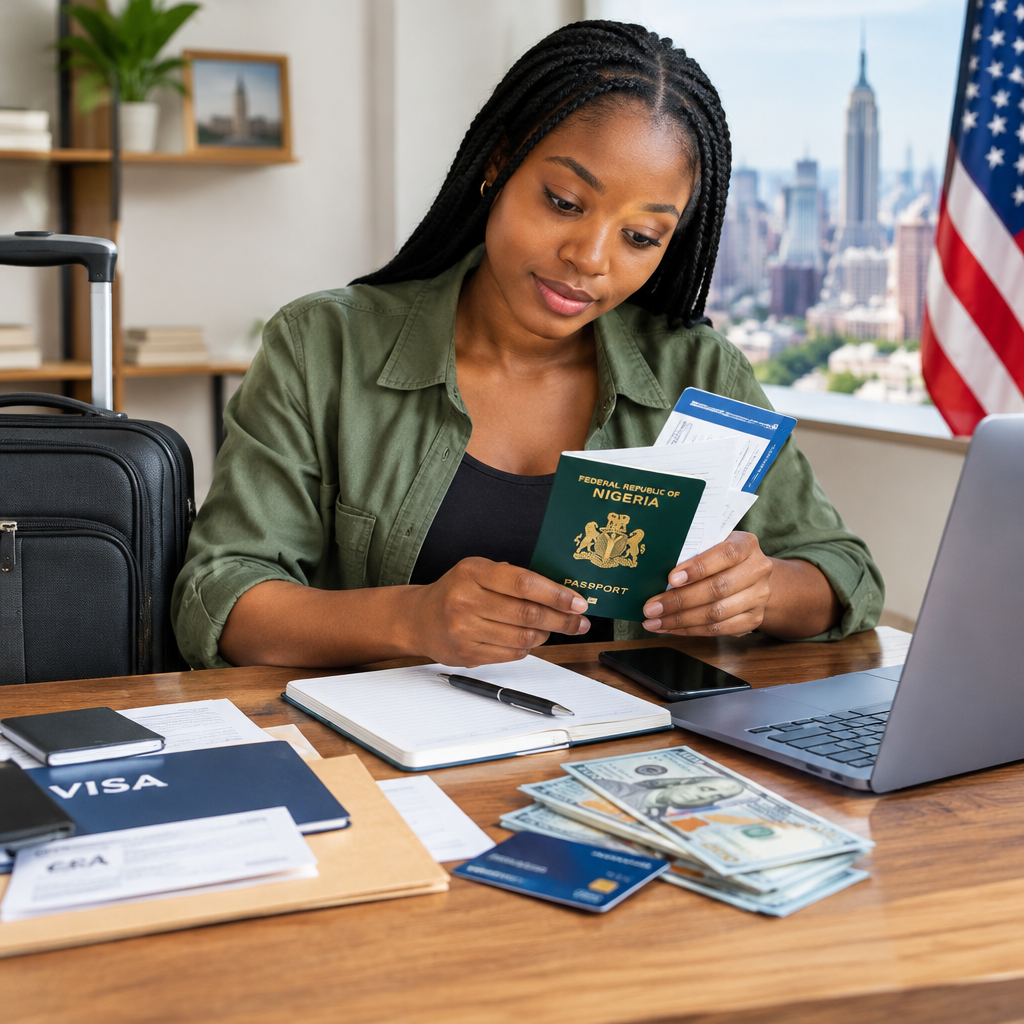
Preparing for a short visit to the United States is easier when your documents are organised before you travel. Many delays and avoidable problems happen because travellers carry incomplete information, rely on one copy of an important document or cannot clearly explain the purpose of the trip.
For Nigerian travellers, the best approach is to create one travel folder containing your original documents, printed copies and secure digital backups. This guide explains what to prepare for a tourism, family-visit or similar short trip. It is general information, not a guarantee of visa approval or entry. Visa and entry requirements can change, so confirm current details through the official US embassy or consular website before making final arrangements.
Advertisement
Table of Contents
Start with the documents that prove your identity
Your passport is the central document for international travel. Check that:
- Your name matches the name used in your visa application and other travel records.
- The passport is valid for the required period for your trip.
- There are enough blank pages for travel stamps or other processing.
- The passport is not damaged, torn or missing important pages.
Carry the original passport in your hand luggage, not inside checked baggage. Keep a clear photocopy of the biographical page separately. You should also save a secure digital copy in a location you can access without carrying the original document everywhere.
If you have used previous passports, check whether they contain relevant travel or visa records. You may need to keep them available, particularly if information in an earlier passport supports your travel history or previous US visa information.
Keep your visa records together
If you are travelling for a purpose that requires a US visitor visa, organise every document connected with your application. This may include your appointment confirmation, application confirmation page, payment record where applicable and any instructions issued by the US authorities.
Keep the visa in the passport linked to it. If your visa is in an old passport and you also have a new valid passport, do not remove the visa. Carry both passports and follow the instructions of the relevant US authorities or airline.
A visa allows you to travel to a US port of entry and request admission; it does not by itself guarantee entry. A US Customs and Border Protection officer makes the admission decision at the border. Your answers should be truthful, brief and consistent with the information in your application.
Do not use edited documents, false employment letters or invented travel plans. A document that appears convincing but contains false information can create serious immigration problems.
Prepare evidence that explains your short visit
For a short visit, your documents should help explain three basic points:
- Why you are travelling.
- Where you will stay.
- Why you plan to return after the visit.
The exact documents that may be useful depend on your circumstances. A tourist may organise a simple itinerary, hotel information and leave approval from an employer. Someone visiting family may carry the host’s address and contact details, along with information about the relationship and purpose of the visit.
Evidence of ties to Nigeria may include employment records, approved leave, business registration or business activity documents, school records, family responsibilities or other information that accurately reflects your situation. There is no single document that proves you will return. The important point is that your explanation and documents should be genuine, consistent and easy to understand.
Do not create a large bundle of unrelated papers simply to make your file look impressive. A smaller, well-organised set of relevant documents is usually easier to explain than a disordered collection.
Organise financial documents carefully
You should be able to explain how your trip will be paid for. Depending on your circumstances, useful records may include:
- Recent bank statements or other legitimate evidence of available funds.
- Salary slips, employment confirmation or approved leave documentation.
- Business records if you are self-employed or operate a company.
- A clear explanation of who will pay for the trip if another person is sponsoring you.
Your financial documents should tell a consistent story. A sudden unexplained deposit shortly before an application or interview may raise questions. Never borrow money temporarily or submit altered bank statements to create the appearance of financial strength.
Protect sensitive information. Do not send your bank password, card PIN, one-time password or online banking login to an agent, travel helper or supposed embassy representative. These details are private and are not needed for legitimate visa guidance.
Confirm accommodation and contact details
Write down the full address and telephone number of your accommodation. If you will stay with a friend or relative, confirm the person’s name, address and relationship to you. If you have a hotel reservation, keep the reservation details, but avoid making expensive non-refundable arrangements before you understand the risks and conditions involved.
Carry your US contact information in both printed and digital form. It should be easy to find if your phone battery dies or your mobile connection does not work immediately after arrival.
Build a simple travel folder
A practical folder can be divided into four sections:
Section one: travel identity
- Passport and copies of the identification page.
- Visa record and application-related confirmations.
- Flight booking or itinerary, if already arranged.
Section two: purpose and accommodation
- Brief itinerary showing the cities or places you expect to visit.
- Hotel or host information.
- Invitation or event information where relevant.
Section three: finances and return plans
- Relevant bank or income documents.
- Employment, school or business records that support your circumstances.
- Return-flight information if purchased, while remembering that a ticket does not guarantee admission.
Section four: health, insurance and emergencies
- Travel insurance details if you have purchased cover.
- Prescriptions and a doctor’s note where appropriate.
- Emergency contacts in Nigeria and the United States.
- A list of important medicines and allergies.
Keep only documents you can explain. If a document is not in English, check whether a suitable translation is needed for the specific process. Do not assume that an informal translation will be accepted.
Make digital backups without creating a security risk
Scan or photograph important documents and save them in a secure account. Use a strong, unique password and enable multi-factor authentication. Avoid leaving passport scans in public messaging groups, shared computers or unsecured email accounts.
Also keep an offline copy on your phone or a protected storage device. Digital copies are useful if a document is lost, but they do not replace the original passport or any document that authorities require in original form.
Check everything before leaving Nigeria
Use this final review:
- Compare the names and dates of birth across your passport, visa records and bookings.
- Confirm that your travel purpose is consistent everywhere.
- Check your accommodation address and emergency contacts.
- Separate hand-luggage documents from checked luggage.
- Confirm airline requirements and official US travel guidance before departure.
- Tell a trusted person where copies of your documents are stored.
At the airport and border, answer questions directly and honestly. Do not memorise a complicated speech. Know your destination, length of stay, accommodation, purpose of travel and how the trip will be funded.
The practical takeaway
Good document preparation is not about carrying the biggest file. It is about presenting a truthful, consistent explanation of your short visit and being able to find each important record quickly. Start with your passport and visa documents, add relevant evidence of your purpose, finances and accommodation, then protect everything with separate paper and digital backups. Before travelling, verify the latest instructions with official US government and airline sources because requirements and procedures can change.
Advertisement
