

Advertisement
Advertisement
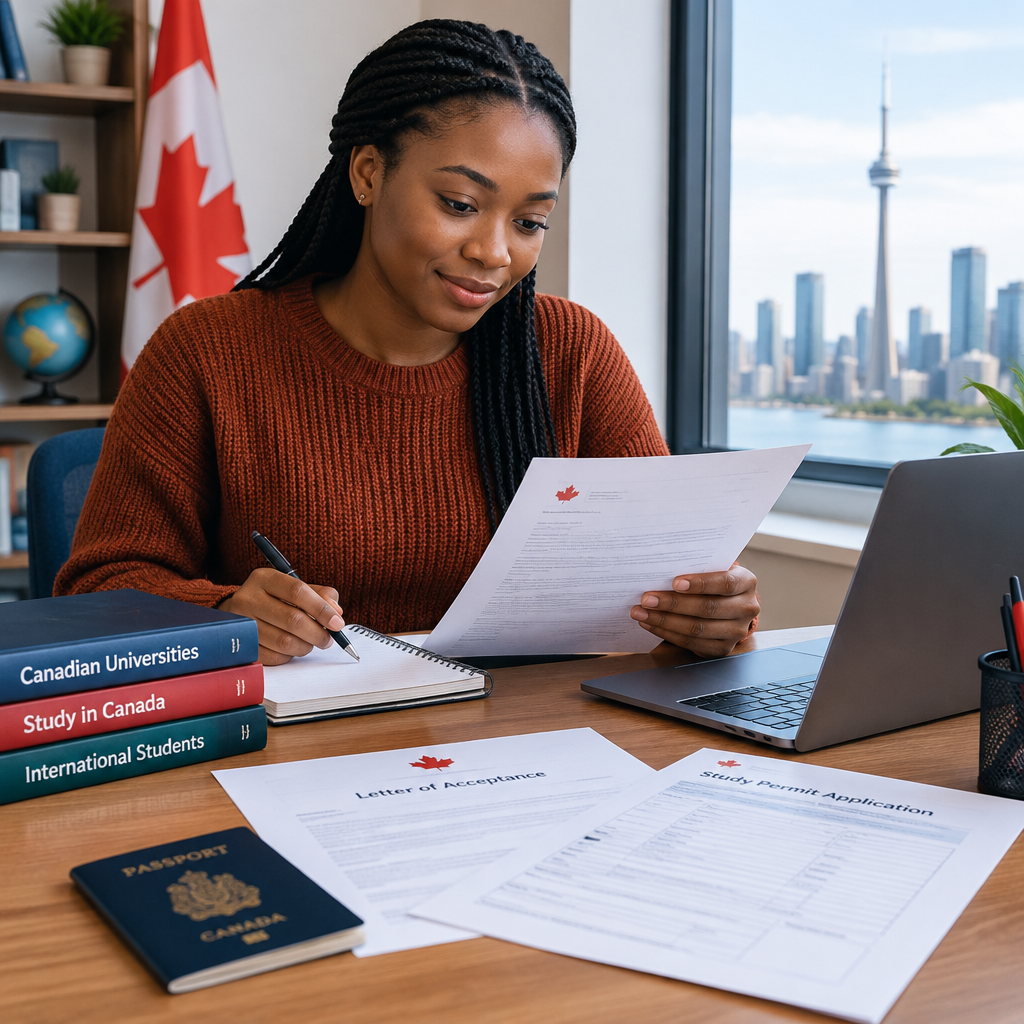
Getting admission to a Canadian school does not automatically give you permission to study in Canada. Admission and the study permit are connected, but they are separate processes handled by different authorities.
The school decides whether you meet its academic and admission requirements. Immigration, Refugees and Citizenship Canada (IRCC) decides whether you qualify for a study permit. A strong application must therefore satisfy both sides: you need a genuine place in an eligible programme and convincing evidence that you can comply with Canada’s immigration requirements.
Advertisement
Table of Contents
How the two processes fit together
The usual sequence is:
- Choose a suitable Canadian institution and programme.
- Apply to the institution and provide the required documents.
- Receive a letter of acceptance if the school approves your application.
- Obtain any additional provincial or territorial document required for your situation.
- Prepare and submit the study permit application to IRCC.
- Complete biometrics, medical examinations or other steps if requested.
- Wait for a decision before making final travel arrangements.
You generally cannot apply for a study permit without proof of acceptance. However, receiving an acceptance letter is not a guarantee that the permit will be approved.
Step one: choose the right school and programme
Start by checking whether the institution is a Designated Learning Institution (DLI). A DLI is a school approved by a provincial or territorial government to host international students. A study permit application normally requires an acceptance letter from a DLI.
Do not choose a school only because an agent, social-media post or friend recommends it. Check the institution and programme through official Canadian government and school websites. Confirm:
- Whether the institution appears on the official DLI list.
- Whether the specific programme is available to international students.
- The academic entry requirements and English or French language requirements.
- The programme length, intake date and tuition payment rules.
- Whether the qualification fits your previous education and realistic career plans.
- Whether the programme has any restrictions affecting post-graduation options.
Your choice should make sense as part of your educational history. For example, a Nigerian applicant with a background in computer science may need to explain a move into a related technology programme. A sudden change into an unrelated course at a much lower academic level may require a clear, honest explanation.
What schools usually assess
Each institution sets its own requirements, so there is no single admission checklist for every Canadian school. Common documents may include:
- International passport or other identity document.
- Secondary-school certificates or university transcripts.
- Degree certificate, where applicable.
- English or French language test results, if required.
- Statement of intent, personal statement or study plan.
- Reference letters for some programmes.
- Portfolio, résumé or proof of relevant experience for selected courses.
- Application fee, where the institution charges one.
Submit genuine documents and use the name and dates consistently across your application. Differences between your passport, certificates and forms can create delays or questions. If a document is not in English or French, check whether the school requires a translation and what type of translator is acceptable.
Understanding the letter of acceptance
A letter of acceptance, often called an LOA, confirms that a Canadian institution has offered you a place. It may contain your programme name, start date, tuition information, conditions of admission and instructions for accepting the offer.
Read the letter carefully. Some offers are conditional. For example, the school may still require a final transcript, a language score, a deposit or another document. You should understand and satisfy those conditions before treating the admission as complete.
Keep the original electronic or paper documents sent by the institution. Do not rely only on screenshots or messages from an agent. If you are unsure whether an offer is genuine, contact the school through the email address or telephone details published on its official website.
Provincial or territorial documents may also matter
In addition to an acceptance letter, some students may need a document from the province or territory connected to their studies. The rules and process can depend on where you will study, your age, programme and other factors.
For example, Quebec has its own education-related process for many international students, including the requirement commonly known as the Certificat d’acceptation du Québec (CAQ). Other provinces may use different arrangements, including a provincial or territorial attestation process. Requirements can change, so check the official IRCC page and the relevant provincial or territorial government before submitting your application.
Do not assume that an LOA alone is enough. If IRCC asks for another document and you submit an incomplete application, processing may be delayed or the application may be refused.
Preparing the study permit application
After receiving the required school and provincial documents, prepare the study permit application through the official Canadian immigration process. The application normally requires evidence covering four broad areas.
Identity and background
Provide your passport information, travel history and personal details accurately. Answer questions about previous visa refusals, immigration applications or legal issues honestly. Hiding a refusal or giving inconsistent information can seriously damage an application.
Purpose of study
Your application should explain why you selected the programme, why the institution is suitable and how the course connects with your education or work plans. Avoid copying a generic statement from the internet. A useful study plan should be personal, specific and supported by your documents.
Financial capacity
You must show that you can support yourself during your studies and account for relevant costs, including tuition, living expenses and travel. The evidence may involve bank statements, education loans, scholarship letters, income documents or financial support from a sponsor.
If a parent or another person is funding you, explain the relationship, source of funds and ability to provide the support promised. Large unexplained deposits shortly before an application can raise questions. Never submit altered bank statements or borrowed funds presented as your own.
Temporary-resident requirements
A study permit is generally connected to temporary study in Canada. Your application should address whether you will respect the conditions of your stay and what you intend to do when your authorised period ends, unless you later qualify for another lawful status.
Common mistakes that connect admission problems to permit refusals
- Choosing a programme without a clear reason: Admission alone does not explain why the course is appropriate for you.
- Using an unverified agent: An agent cannot guarantee a visa or bypass IRCC requirements.
- Submitting inconsistent documents: Different spellings, dates, employment histories or education details can create doubts.
- Ignoring conditional admission: A conditional offer may not be enough if required conditions remain outstanding.
- Relying on outdated advice: Provincial documents, financial rules and application procedures can change.
- Paying for a fake offer: Confirm every offer directly with the institution before paying tuition or service fees.
- Booking non-refundable travel too early: Wait for the relevant approval and follow the instructions in your decision letter.
A practical document check before submission
Before submitting, compare your documents as if an unfamiliar officer were reviewing them. Ask:
- Do my education and work history support the programme I selected?
- Is the school a DLI, and is my programme open to international students?
- Have I included the correct acceptance and provincial documents?
- Can I explain every major source of money shown in my financial evidence?
- Are my passport, application forms and supporting documents consistent?
- Have I followed the current instructions on the official IRCC website?
The key distinction to remember
School admission answers the question, “Has this institution accepted me?” The study permit process asks a wider question: “Does this applicant qualify to study in Canada under Canadian immigration rules?”
For Nigerian students, the safest approach is to treat the application as one connected story: a credible academic choice, a genuine acceptance from an eligible institution, sufficient and traceable funding, accurate documents and a clear explanation of your plans. Use the school’s official admissions office for admission questions and IRCC for immigration requirements. Neither an agent nor an acceptance letter can replace careful preparation.
Advertisement