

Advertisement

Advertisement
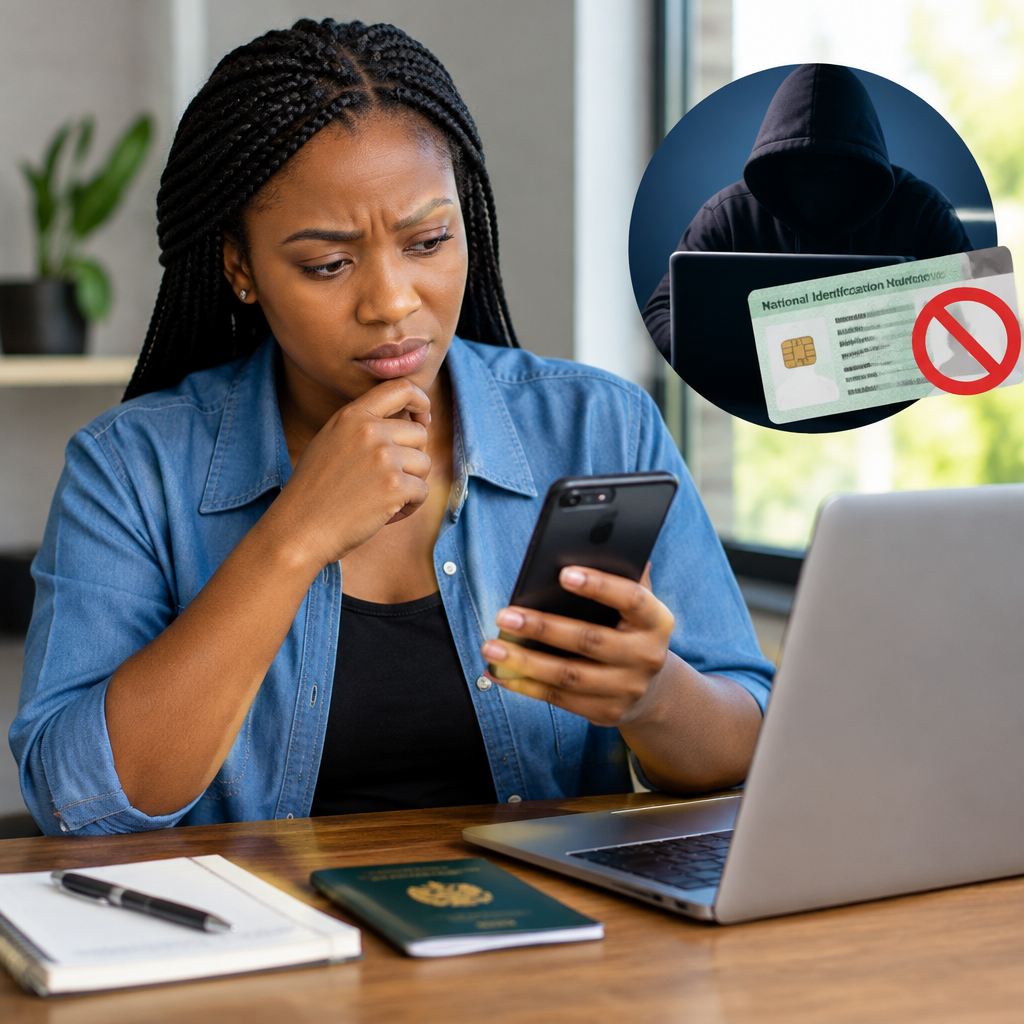
Need to correct a name, date of birth, address or other detail on your National Identification Number record? Be careful before handing your documents or money to anyone online. Fraudsters often advertise “fast NIN correction”, promise guaranteed approval or claim to have special access to the National Identity Management Commission (NIMC).
A genuine correction may require identity checks, supporting documents and processing through an authorised channel. No private agent can honestly guarantee that a correction will be approved simply because you pay extra.
Advertisement
This guide explains the warning signs of a fake NIN correction service and the safer steps to take, whether you are in Nigeria or living abroad.
Table of Contents
Why NIN correction scams are dangerous
NIN-related requests usually involve sensitive information. A scammer may ask for your NIN, full name, date of birth, phone number, passport photograph, identity documents, bank details or login information. These details can be used for impersonation, account fraud, unauthorised registrations and other scams.
The risk is not limited to losing money. Once a stranger has copies of your identity documents, it can be difficult to know where they will be stored or shared. A fake agent may also submit incorrect information, disappear after receiving payment or use your details to create more convincing scams.
Common signs that a NIN correction service may be fake
1. The person promises guaranteed approval
Be suspicious of claims such as “100% approval”, “no matter your problem, we will fix it” or “your correction is guaranteed today”. A legitimate process still depends on identity verification, documents, data checks and the decision of the responsible authority.
An agent may help you understand a procedure, but they cannot legitimately guarantee an outcome they do not control.
2. The service exists only on WhatsApp or social media
Many legitimate businesses communicate through WhatsApp, but a WhatsApp number alone does not prove that a service is authorised. A profile picture, logo, sponsored post or large follower count can be copied or fabricated.
Be particularly careful when the person refuses to identify the organisation they represent, will not provide a verifiable office or keeps changing phone numbers. Social media should be treated as a contact channel, not proof of official status.
3. You are pressured to pay immediately
Scammers often create urgency. They may say that the correction window is closing, your bank account will be blocked immediately or the price will increase within minutes. Pressure is designed to stop you from checking the claim.
Pause and verify the process independently. Do not pay because an agent says many other people are waiting or because they send screenshots of supposed successful corrections.
4. The price is unclear or keeps changing
A suspicious agent may quote one amount in an advert, request another amount after receiving your documents and then demand extra money for “activation”, “approval”, “tracking” or “release”.
Before paying for any service, ask for a clear written explanation of what the payment covers, who receives it and whether an official receipt will be issued. Do not assume that a cheap offer is safe, and do not assume that an expensive offer is genuine.
5. The agent asks for your PIN, OTP or password
This is a serious warning sign. NIN correction should not require you to disclose a bank PIN, debit-card PIN, one-time password, email password, mobile banking password or account recovery code.
Never send these details to an agent, even if the person claims to be helping you link your NIN to a bank, mobile network or other account. An OTP is meant to authorise an action for you; giving it to someone else may allow them to complete an unauthorised transaction or account change.
6. The person asks you to use an unknown website or application
Do not enter your NIN or identity information into a website simply because it contains words such as “NIMC”, “verification” or “correction”. Scammers can copy official-looking colours, logos and page layouts.
Check the exact web address, the organisation behind the service and whether the link was provided through a trusted official channel. Avoid installing an application sent as an unknown file or giving remote access to your phone or computer.
7. The agent says no documents or verification are needed
Legitimate identity-record corrections normally require some form of verification. The exact documents and procedure can depend on the type of correction. Therefore, a person who promises to change important details without checking your identity should not be trusted.
The opposite can also be suspicious: an agent who requests every document you have without explaining why may be collecting information for another purpose.
How to check whether an agent is legitimate
- Identify the organisation. Ask whether the person works for NIMC, an authorised enrolment or service centre, or an independent assistance business. These are not the same thing.
- Verify independently. Find the official NIMC contact or service information yourself rather than relying only on a link or phone number sent by the agent.
- Ask what type of correction is involved. A name change, date-of-birth issue, address update and correction of a spelling error may not follow the same route.
- Request a proper receipt. The receipt should identify the service provider and describe the payment. Avoid sending money to a personal account when the person claims to represent an official organisation.
- Check the documents before submitting them. Only provide information relevant to the correction. Keep copies of what you submit, but store them securely.
- Do not surrender control of your phone. No genuine helper needs your banking password, email access or unrestricted remote-control access to “complete” a NIN correction.
A safer correction workflow
Start by writing down the exact information that is wrong and the information that should replace it. Check your existing identity documents for consistency. If different documents contain different details, ask the responsible authority which supporting evidence is acceptable before submitting an application.
Next, use an official NIMC channel or a verifiable authorised centre to confirm the requirements. Ask about the procedure, expected stages, payment method and how you will receive evidence that your request was submitted.
When attending a centre, review the information displayed on the screen or form before confirming it. Mistakes can be repeated when applicants approve information without checking spellings, dates and numbers carefully.
After submission, keep your receipt, reference details and copies of relevant documents. Do not pay a second person who claims that the first person “failed to complete” the process unless you independently confirm the claim.
Special warning for Nigerians abroad
Nigerians living outside the country may be targeted because they cannot easily visit a centre to verify an agent’s claims. A person may promise to complete everything remotely or use a supposed “international desk” as a reason to request a large payment.
Before sending documents from abroad, confirm whether the service is officially available in your location and whether the person is connected to a verifiable authorised channel. Avoid agents who refuse video or in-person identification, provide no written procedure or insist that you send documents to a personal email address without explaining how they will be protected.
If you have already paid or shared your details
Act quickly. Stop further communication if the person becomes threatening or demands more money. Contact your bank or payment provider immediately if you sent funds, and ask whether the transaction can be stopped or flagged.
If you shared banking information, contact the bank through its official channel and secure the affected account. Change passwords that may have been exposed, enable additional security where available and monitor your accounts for unusual activity.
Save screenshots, phone numbers, account details, receipts, links and messages. These records may help when reporting the incident to the relevant authorities, your financial institution or the platform used by the scammer. Do not publish your full NIN or identity documents while warning others online.
The simple rule to remember
A trustworthy NIN correction service should be transparent about who provides it, what process it follows, what documents are needed and how payment is recorded. It should not demand secret security codes, guarantee an outcome or use pressure to prevent verification.
When an offer sounds unusually fast or effortless, stop before paying. Verify through an official channel, protect your identity documents and share only the information required for the specific correction. That short pause can prevent both financial loss and a much more serious identity problem.
Advertisement
