

Advertisement

Advertisement
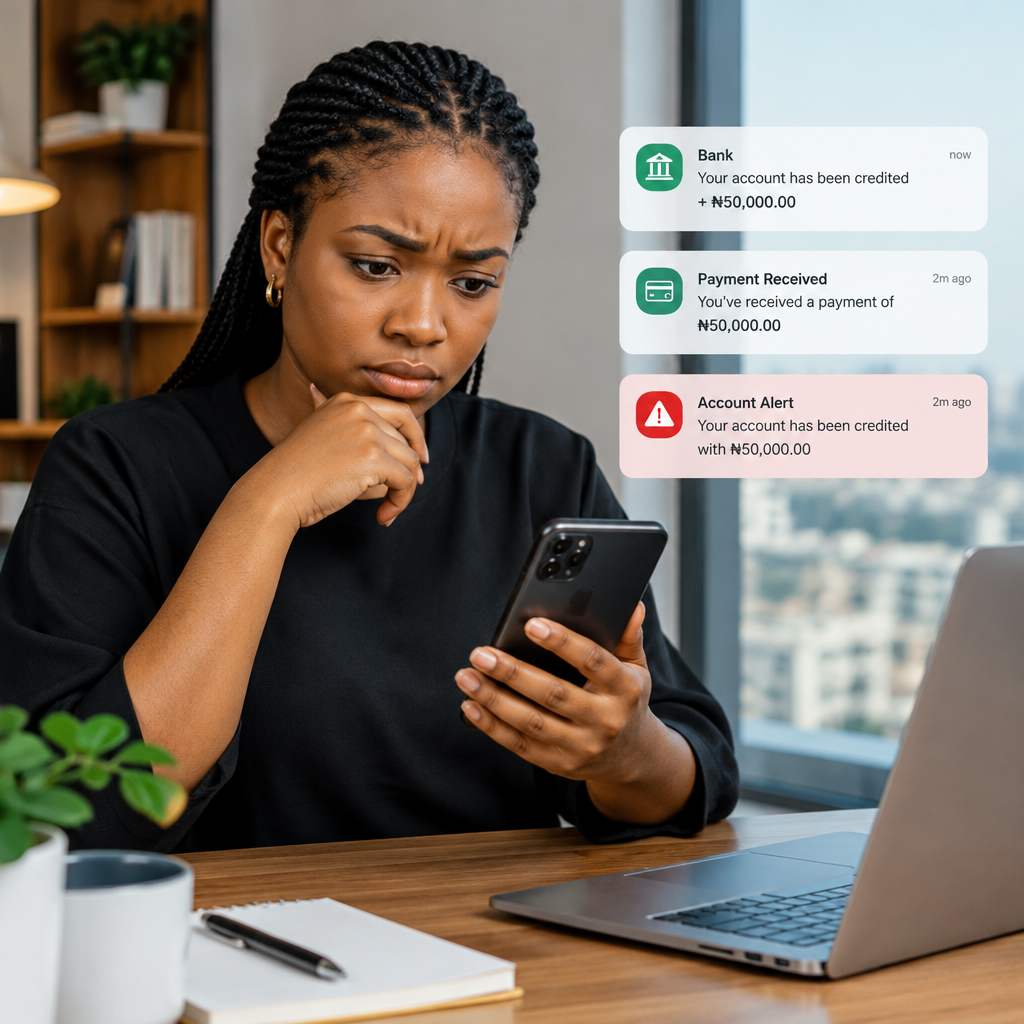
A customer sends you a payment alert and asks you to release the goods immediately. The alert shows your bank’s name, a transaction amount and what appears to be a reference number. But when you check your account, the money is not there.
This is a common warning sign. Fake bank alerts and payment notifications are designed to make sellers, freelancers, online shoppers and service providers believe that a transfer has been completed. The safest rule is simple: do not treat a screenshot, SMS or forwarded message as proof of payment until you confirm the transaction through your own bank or payment account.
Advertisement
Table of Contents
What is a fake bank alert?
A fake bank alert is a forged or misleading message claiming that money has been sent to you. It may arrive as an SMS, email, WhatsApp message, social media chat, payment-app notification or screenshot.
Some scammers edit a genuine alert template. Others use applications that imitate bank messages or create a payment receipt that looks convincing. A scammer may also send a real notification for a failed, reversed or incomplete transaction and pressure you to act before you investigate.
The aim is usually to collect goods, receive a service, obtain a refund or persuade you to send money back.
Signs that a bank alert may be fake
1. The money is not showing in your account
This is the most important warning sign. Open your banking app, internet banking account, USSD service or another trusted channel that you normally use. Check your available balance and transaction history.
Do not rely on the customer’s phone, a screenshot or a message they show you. A genuine payment should be confirmed from your side. If your account does not show the expected credit, pause the transaction.
2. The message contains unusual language or formatting
Fake alerts may contain spelling errors, strange abbreviations, incorrect currency formatting, unusual punctuation or a layout that differs from messages you have previously received from your bank or payment provider.
However, good formatting does not prove that an alert is genuine. Fraudsters can copy logos, colours and wording. Treat appearance as one clue, not as verification.
3. The sender asks you to release goods before the transaction is settled
Pressure is a major part of payment fraud. The person may say they are in a hurry, their network is poor or the money will appear later. They may claim to be a regular customer, a company representative or someone who has been referred by a trusted person.
Legitimate customers can be in a hurry too, but you are not required to take a financial risk for them. Keep the goods or service on hold until your own account confirms the payment.
4. You receive a payment notification from an unfamiliar address or number
Check whether the message came through your bank’s normal channel. Be cautious if it comes from an ordinary mobile number, a personal email address or a social media account claiming to represent a bank.
Do not call a phone number provided in a suspicious message. Use the official contact details in your banking app, on your bank card or on the bank’s verified website.
5. The customer sends an excess payment and requests a refund
This scam may involve a supposed payment that is higher than the agreed amount. The sender then asks you to return the difference or transfer it to another account.
Do not refund money simply because someone sends a receipt. First confirm that the original payment has genuinely entered your account and is not pending, reversed or disputed. If the transaction is unfamiliar, contact your bank through an official channel before taking action.
6. The message asks for your PIN, OTP or login details
A bank or payment provider should not require you to disclose your card PIN, banking password, one-time password, recovery code or full card details to confirm that someone has paid you.
Never share these details with a customer, caller, courier, agent or person claiming to be from a bank. You should also avoid sending screenshots that expose sensitive account information.
How to verify a payment safely
- Pause the transaction. Do not release goods, provide a service or send a refund because of pressure.
- Open your own banking or payment channel. Use the official app, trusted USSD route, internet banking or another channel you already know.
- Check the balance and transaction history. Confirm the amount, sender information where available, date and transaction status.
- Look for the final status. A pending, failed, reversed or disputed transaction should not be treated as settled payment.
- Contact the bank if the information is unclear. Use official support details, not a number supplied by the sender.
- Keep evidence. Save relevant messages, usernames, phone numbers, receipts and transaction references without sharing them publicly.
If you are selling regularly, create a simple rule for your business: an order is processed only after payment is visible in the business account. This is useful for online shops, social-media sellers, freelancers, web developers, digital service providers and people receiving payments from Nigerians abroad.
Bank transfer alerts versus payment-app notifications
Different payment systems may display different messages. A bank transfer, card payment, wallet transaction and payment link can each have a separate confirmation process. A notification from one platform does not automatically prove that your bank account has been credited.
For example, a customer may show a successful-looking receipt from a payment platform while the transaction is still being processed or has not reached your account. Confirm the payment in the account that is supposed to receive the money.
Also be careful with screenshots showing a transaction reference. A reference number can be copied or fabricated. It is useful when speaking to the provider, but it is not a substitute for checking your account.
What to do if you have released goods after a fake alert
Act quickly, but do not confront the person in a way that could put you at risk.
- Contact your bank or payment provider immediately and explain that you suspect a fraudulent transaction.
- Provide the available transaction details, messages, account information and evidence.
- Report the account, phone number or profile through the relevant platform if the contact happened online.
- If goods were collected or a significant amount was lost, consider reporting the matter to the appropriate law-enforcement authority.
- Change passwords if you clicked a suspicious link or entered your details on a fake website.
- Monitor your accounts for unauthorised activity and alert your bank about anything unusual.
Do not send additional money to a scammer who promises to recover the original payment. Recovery scams often target people who have already suffered a loss.
A practical rule for sellers and service providers
Before completing an order, ask three questions:
- Is the money visible in my own account?
- Is the transaction completed rather than pending or reversed?
- Am I being pressured to ignore my normal verification process?
If the answer to any question is uncertain, stop and verify. A genuine payment can wait for proper confirmation. A scammer usually wants you to act before you have time to check.
Protecting yourself from future payment scams
- Use a separate account or clear record for business payments where practical.
- Turn on official transaction notifications, but still verify important payments inside your account.
- Learn the appearance and wording of messages normally sent by your bank, while remembering that scammers can imitate them.
- Do not publish unnecessary personal or banking information online.
- Train staff or family members who help with orders to follow the same verification rule.
- Be especially careful with urgent sales made through social media, messaging apps and unfamiliar online marketplaces.
For online safety guides and everyday digital questions, clear verification is more valuable than trusting a professional-looking message. The safest payment alert is not the one that looks most convincing; it is the transaction you independently confirm in the correct account.
Advertisement
