

Advertisement
Advertisement
If you are starting a business, creator brand or online service, you may wonder whether you need a website or whether a Facebook, Instagram, TikTok or other social media page is enough. The short answer is that each serves a different purpose.
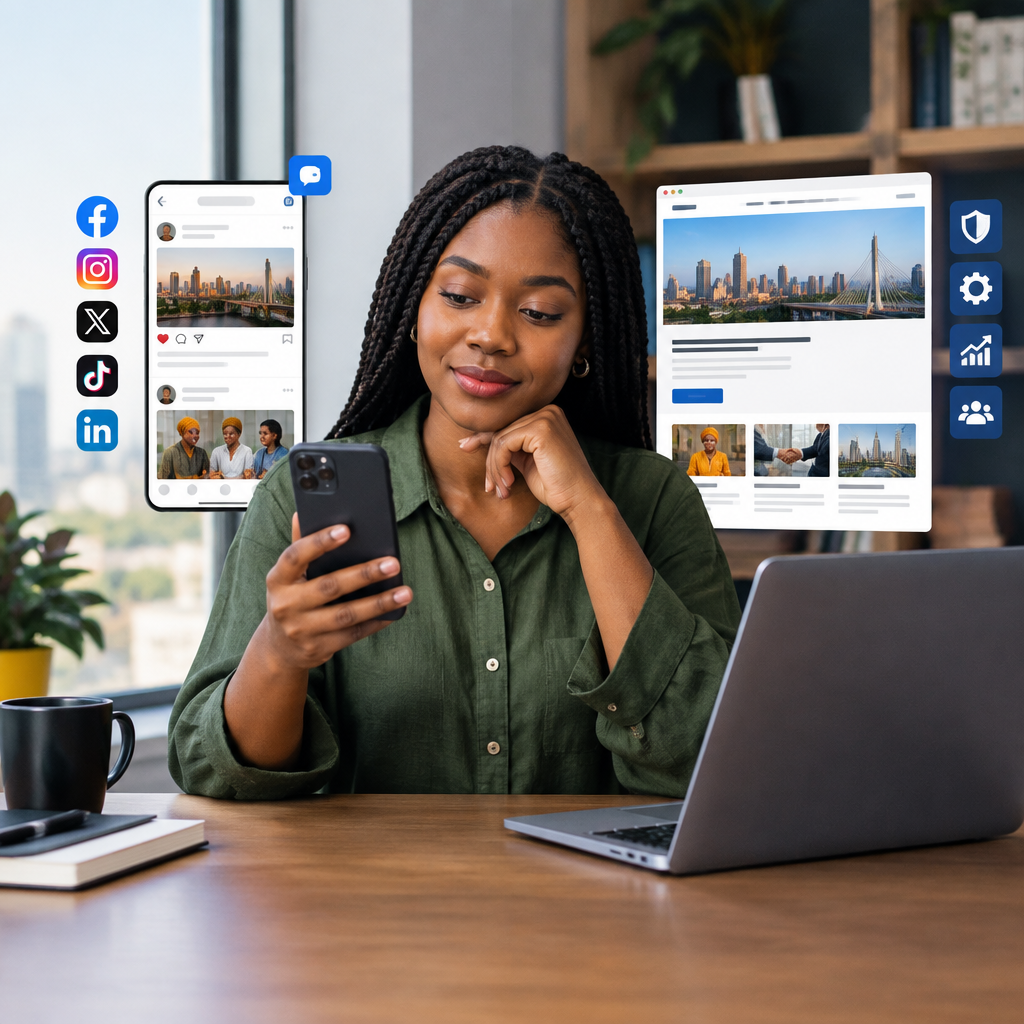
A social media page can help you reach people quickly, display products and start conversations. A website gives you a more permanent digital home where you control the information, customer journey and business tools. For many Nigerian businesses, the strongest approach is to use social media for discovery and a website for trust, detailed information and conversions.
Advertisement
Table of Contents
What is the difference?
A business website is a collection of pages hosted under a domain name that belongs to your business, such as yourbusiness.com or a suitable Nigerian domain. You decide what visitors see, how the pages are organised and what actions they can take.
A social media page exists inside another company’s platform. You use the platform’s rules, design options, algorithms and account systems. Your page may be free to create, but the platform controls how widely your posts are shown and can change its features or policies.
Neither option is automatically better. The right choice depends on what you are trying to achieve, how much control you need and how customers find you.
When a social media page may be enough
A social media page can be a sensible starting point when you are testing an idea, selling a small range of products or building an audience before investing in a full website.
It may suit you if:
- You mainly need a quick public profile with your name, location, contact details and opening hours.
- Your customers already spend time on the platform you plan to use.
- You sell through direct messages, comments, phone calls or messaging apps.
- You want to share frequent updates, short videos, photos, offers or behind-the-scenes content.
- You are still confirming whether there is demand for your product or service.
For example, a Lagos-based food vendor may begin with Instagram and WhatsApp to display meals, receive orders and share delivery updates. A creator may use TikTok or YouTube to build an audience before creating a personal website. A small fashion business may also benefit from social media because visual content can show products more effectively than a plain text listing.
However, a social page should not be treated as a complete business system. Important information can become difficult to find as new posts push older posts down the page. Customers may also be unsure whether an account is genuine, especially when scammers copy business names and profile pictures.
When you need a business website
A website becomes more valuable when customers need detailed information, when you want to appear established or when your business depends on search traffic beyond a single social platform.
Consider a website if:
- You need pages for services, pricing, frequently asked questions, policies, portfolio samples or case studies.
- Customers often search Google for the problem you solve.
- You want to collect enquiries through a structured form rather than scattered direct messages.
- You publish guides, resources, news or educational content.
- You want to sell products, accept bookings, display a catalogue or support online payments.
- You are building a company that may later need employees, partners, advertisers or investors to assess it.
- You need a professional email address and a domain connected to your brand.
A website is particularly useful for web developers, consultants, schools, travel businesses, recruitment services, online shops and organisations that provide several services. It gives visitors one reliable place to confirm what you do and how to contact you.
Website versus social media: the main trade-offs
| Factor | Business website | Social media page |
|---|---|---|
| Control | You control the content, structure and customer journey. | You depend on the platform’s rules and features. |
| Speed to launch | Usually requires a domain, hosting and setup. | Can often be created quickly. |
| Content depth | Suitable for detailed pages, guides and resources. | Best for short, visual and frequently updated content. |
| Reach | Can attract visitors through search, links and direct visits. | Can reach followers and new users through sharing and recommendations. |
| Trust | A well-made website can provide a stronger central reference point. | A genuine, active page can build familiarity and social proof. |
| Risk | Requires maintenance, security and renewal of hosting and domain services. | Account restrictions, hacking or platform changes can affect access and visibility. |
Do not confuse followers with ownership
One of the most important differences is ownership. You do not own a social media platform or control its algorithm. Even if you have many followers, a platform may show your post to only part of that audience. Your account could also be locked, impersonated or restricted if you lose access or breach a rule.
A website does not remove every risk. You still need secure passwords, software updates, backups and reliable hosting. But you have more control over your published information and can create ways to keep in touch with visitors, such as an email list or customer database managed responsibly.
Do not collect more personal information than you need. Protect customer data, avoid requesting passwords or one-time passwords, and clearly explain how people should contact you through official channels.
A practical decision framework
Ask these five questions before choosing:
- How do customers find you? If they discover businesses through social posts and recommendations, begin with a social page. If they search for answers or services, a website is more important.
- How much information must customers review? A simple profile may be enough for one service. Several services, instructions, prices or application steps call for a website.
- What action should visitors take? If the action is sending a message, social media may work. If it involves booking, comparing options, submitting details or buying several products, a website may provide a clearer process.
- How serious is the business commitment? A temporary side project may start socially. A long-term business should normally secure its domain and create a central online presence.
- Can you maintain both? An abandoned website or inactive social page can reduce trust. Choose a manageable setup and keep contact information consistent.
The best option for many businesses: use both
You do not have to choose one forever. A practical growth path is to start with a social media page, validate your idea and then build a simple website when customers need more information or your operations become harder to manage.
Your website can contain your core information: services, products, contact details, policies, useful articles and clear next steps. Social media can then direct people to the relevant website page rather than forcing every customer to search through old posts.
For a Nigerian digital business, this combination is especially useful. Social platforms can help you share technology tips, online safety reminders, creator content or service updates. A website can organise those resources, explain web development or hosting services, support online shopping and give readers a dependable place to verify information.
A simple starting plan
- Choose a clear business name and use it consistently across platforms.
- Reserve a suitable domain if you intend to operate for the long term.
- Create a social profile on the platform where your likely customers are active.
- Publish accurate contact details, service descriptions and operating information.
- Add security measures such as a strong unique password and two-factor authentication where available.
- Review your results monthly: enquiries, sales, website visits, messages and the questions customers repeatedly ask.
Start with the channel you can maintain, but avoid building your entire business on borrowed space. A social media page can bring attention and conversation; a website can turn that attention into a clearer, more dependable customer experience.
Useful takeaway: Choose social media first when speed, community and visual updates matter most. Choose a website when control, search visibility, detailed information and long-term credibility matter most. If your business is growing, use social media to attract people and your website to help them decide and take action.
Advertisement