

Advertisement

Advertisement
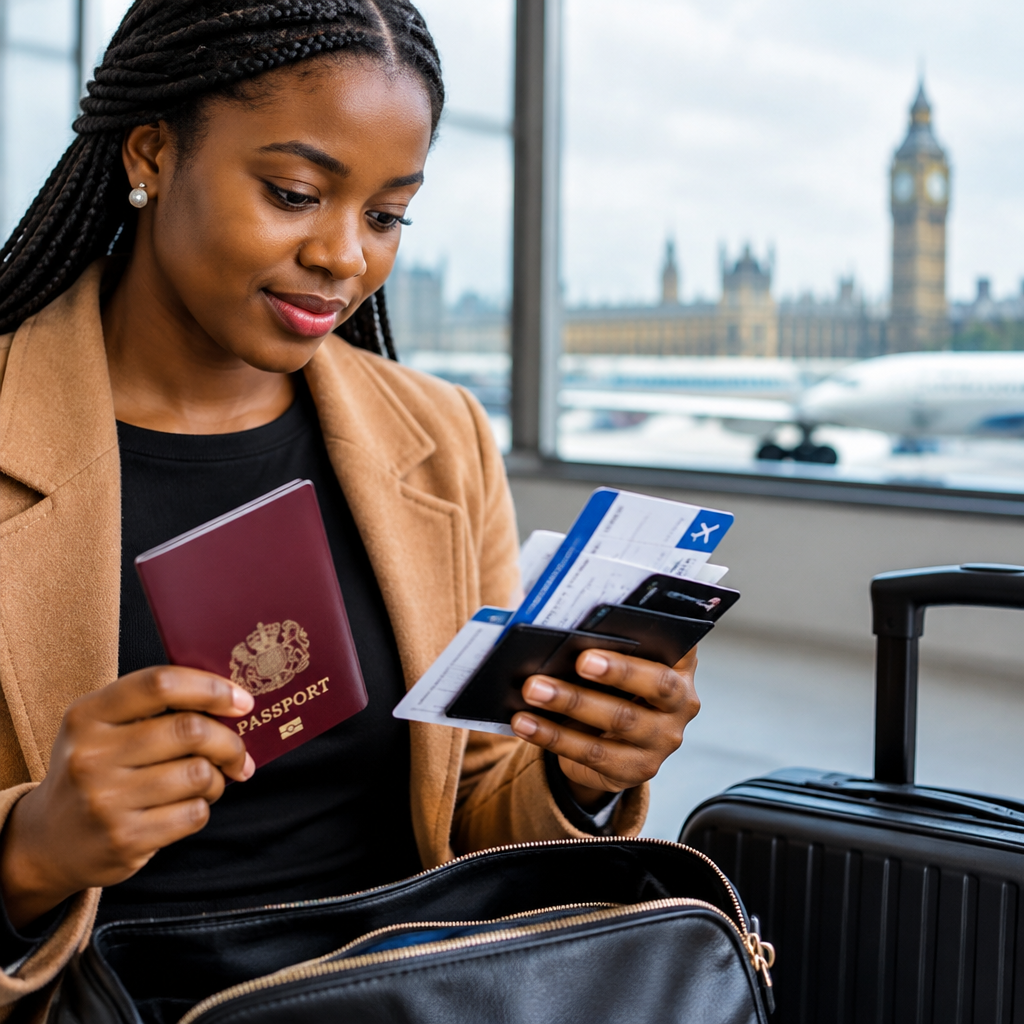
At the airport, important travel documents should be easy to reach—not buried inside checked luggage. If your checked bag is delayed, lost or sent to another airport, you may still need to prove your identity, explain your travel plans and contact people waiting for you.
For Nigerians travelling to the United Kingdom for a visit, study, work or family reasons, the safest approach is to prepare one organised document folder for your hand luggage. Keep original documents where required, and carry secure copies of important records as a backup.
Advertisement
Table of Contents
Start with your passport and permission to travel
Your passport is the most important document in your hand luggage. Check that:
- The name matches the details used for your flight and immigration application.
- The passport is not damaged.
- You have enough validity for your planned journey and return arrangements.
- You have checked whether your travel permission is a visa, an electronic travel permission or another document linked to your passport.
Carry your visa or travel-authorisation details in the format provided by the relevant UK authority. Some permissions may be linked electronically to a passport, while others may involve a visa vignette or separate documentation. Do not assume that an approval email alone is all you need. Read the instructions that came with your permission and confirm that you are travelling with the same passport details used in the application.
If you have recently renewed your passport, changed your name or replaced a lost passport, check whether your immigration permission must be transferred, updated or carried with the old passport as well.
Documents for your reason for travelling
Border officers may ask questions about why you are entering the UK and how long you intend to stay. Your documents should help you answer clearly and consistently.
Visitors and tourists
Keep evidence of your intended visit, where relevant:
- Return or onward travel details.
- Accommodation confirmation, such as a hotel booking or the address of your host.
- The name, telephone number and address of anyone you are visiting.
- A simple outline of your plans and expected length of stay.
- Evidence of financial arrangements if this formed part of your application or may be relevant to questions about your trip.
You do not need to carry a large bundle of papers without purpose. The useful principle is to keep documents that support the information you gave in your application and that explain your immediate travel plans.
Students
Students should keep their education and immigration records together. These may include:
- Your university or school offer or enrolment confirmation.
- The relevant student immigration document or reference.
- Details of your tuition and accommodation arrangements.
- The address of your institution and contact information for its international student team.
- Evidence of your accommodation booking or temporary place to stay.
If you are travelling before your accommodation becomes available, keep the temporary booking and the institution’s address accessible. This makes it easier to explain where you will stay immediately after arrival.
Workers and business travellers
Depending on your route and circumstances, carry documents connected to your employment or business visit, such as:
- Your work-related immigration permission or reference.
- An employment letter, contract or assignment letter.
- The name and address of your employer or UK sponsor, where applicable.
- Details of your first workplace, reporting date and contact person.
- Accommodation information for the first part of your stay.
Only carry documents that are genuine and relevant. Never alter a letter, booking or financial record to make an application or journey appear stronger.
Keep accommodation and contact details on paper
Phone batteries can die, mobile data may not work immediately and airport Wi-Fi may be unreliable. Write down or print the following:
- Your UK accommodation address.
- The name and telephone number of your host, school, employer or family contact.
- Your travel insurance or assistance contact, if you have cover.
- The contact details of someone in Nigeria who can be reached in an emergency.
- Your airline booking reference and onward travel information.
Make sure the address is complete, including the postcode when available. If someone is collecting you, agree on where to meet before departure rather than relying only on a last-minute phone call.
Medical and personal documents
If you take regular medication or have a medical condition, keep relevant information in your hand luggage. This can include:
- A prescription or medication list using the generic medicine name where possible.
- A short letter from your doctor for medicines that may require explanation.
- Details of allergies, ongoing treatment or important medical conditions.
- Travel insurance information and emergency assistance instructions.
- Copies of important vaccination or health records if they are relevant to your journey.
Keep medicine in its original packaging and check the rules that apply to the medicines you are carrying. Do not place essential medication in checked luggage, where you may not be able to access it during the journey.
Copies, scans and digital backups
Copies are useful if an original document is lost, but they do not always replace the original. Before leaving Nigeria:
- Scan your passport identity page, visa or permission documents, tickets and key bookings.
- Save the files in a secure account that you can access without relying on one phone.
- Send copies to a trusted family member or keep them on an encrypted storage device.
- Print a small set of essential copies and keep them separately from the originals.
Protect digital files with a strong password and avoid sending sensitive documents to unknown agents, social-media accounts or public computer operators. Never share your passport scan, bank login, card PIN, password or one-time password with someone who claims they need it to “help” you at the airport.
Organise your hand-luggage folder
A simple arrangement can save time at check-in and border control:
- Front section: passport, visa or travel-permission evidence and boarding information.
- Second section: accommodation, return travel and host or institution details.
- Third section: employment, study or visit documents that explain the purpose of your journey.
- Separate pouch: medication, prescriptions and emergency contacts.
- Backup section: printed copies and a written list of digital file locations.
Use a waterproof folder or document wallet. Keep it in a small bag that remains with you, not in a suitcase that may be checked at the gate. Avoid handing your complete document folder to strangers or unofficial “airport helpers”.
Do a final consistency check
Before leaving for the airport, compare the information across your documents. Your name, passport number, travel dates, accommodation address and purpose of travel should not contain unexplained differences. If something has changed, such as your accommodation or passport, seek clarification from the relevant official authority before travelling.
Also check your airline’s baggage rules and the current UK government guidance relevant to your nationality, immigration route and purpose of travel. Requirements can change, and a general checklist cannot replace route-specific instructions.
The practical takeaway
Your hand luggage should allow you to prove three things quickly: who you are, why you are travelling and where you will stay or go next. Keep the originals you may need, add secure backups, print essential contact details and protect your personal information. Good preparation will not guarantee entry, but it can prevent avoidable confusion when your documents are requested.
Advertisement
